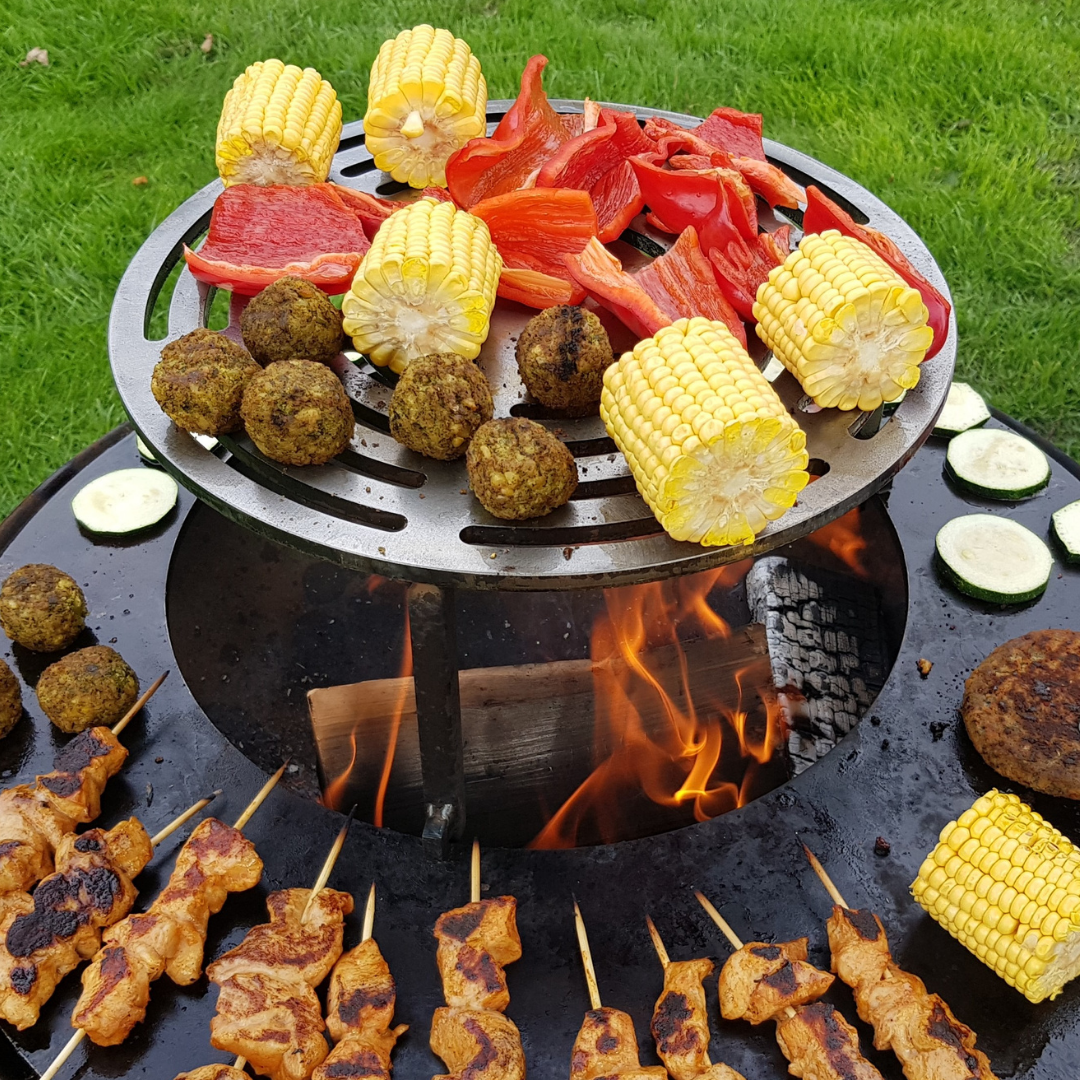

A plancha or GrillRing brings out something in peppers that often gets lost on a traditional grill grate. Through direct contact with hot steel, peppers develop a deep sweetness, lightly roasted flavours and a soft texture without drying out. Especially when cooking over a wood fire, this creates a flavour that pairs perfectly with fish, grilled meat and simple vegetable dishes.
The main difference is the cooking surface. On steel, peppers quickly develop colour while their moisture gradually evaporates. This creates darker edges and a more concentrated flavour without making the vegetables too soft. Especially on a wide plancha BBQ or a large GrillRing, there's plenty of space to work with different heat zones.
Anyone who regularly cooks outdoors will quickly notice that peppers behave differently from vegetables such as courgette or onion. Their natural sugars react strongly to heat. That's exactly why steel works better than an open grill grate, where much of the direct contact with the cooking surface is lost.
Why peppers work so well on a steel cooking surface
Peppers naturally contain plenty of sugar and moisture. On hot steel, the moisture on the outside evaporates first, after which the sugars begin to caramelise. This creates the darker spots and rich flavour that make wood-fired peppers so distinctive.
One of the main advantages of steel is its consistent heat. On a grill grate, peppers often only develop grill marks while much of the remaining surface has little contact with the heat. Steel provides even contact across the entire surface, allowing the peppers to cook faster and with more control.
Red peppers caramelise particularly well due to their higher sugar content. Yellow peppers retain a slightly fresher, milder flavour, while green peppers respond more firmly to high heat and keep more of their bite.
The right temperature on a plancha or GrillRing
Too much heat will burn the outside before the sugars have time to develop properly. Too little heat, on the other hand, results in soft peppers without much colour. Medium-high to high direct heat usually works best.
When cooking over a wood fire, the outer edge of the steel cooking surface is often slightly cooler than the centre. This is ideal for peppers. Start closer to the hotter zone to develop colour, then move them towards the outside so they can finish cooking more gently.
A thin layer of oil helps prevent sticking, but don't overdo it. Too much oil causes the peppers to stew rather than caramelise.
How you cut peppers affects their texture
Large strips stay firmer and mainly caramelise around the edges. Thinner strips cook more quickly and develop a softer texture. When peppers are served as a side dish, for example alongside flank steak or grilled prawns, wider strips usually work best.
Small cubes can work well with smashburgers or fried potatoes, but they require more attention on hot steel. Their larger exposed surface means they can burn more quickly.
Always leave enough space between the pieces of pepper on the cooking surface. When they overlap, steam develops and you lose the roasted effect.
When peppers really start to develop flavour
Many people remove peppers from the heat too soon. Good caramelisation takes a little more time than you might expect. The outside should develop clearly visible dark spots without turning completely black.
You'll also notice the aroma begin to change. At first, peppers smell fresh and green, but as they cook, the aroma becomes noticeably sweeter and richer. That's usually the point when the natural sugars are starting to caramelise properly.
A small amount of salt just before serving enhances those sweet flavours even further. Add herbs afterwards where possible, as dried herbs in particular can burn quickly on hot steel.
Flavour combinations that work well with wood-fire cooking
Caramelised peppers pair particularly well with ingredients that bring some richness or smokiness, such as sirloin steak, lamb, merguez or halloumi. They also work well in simple dishes, for example with yoghurt, olive oil and toasted bread.
On a GrillRing BBQ, you can easily combine peppers with other vegetables that can handle similar temperatures, such as onions or aubergine. This keeps the cooking process around the fire relaxed and easy to manage.
When cooking on a fire bowl BBQ, peppers can develop even more flavour from subtle variations in temperature and smoke. It's exactly this slight variation that makes outdoor cooking on steel so interesting.
🔥 Explore our fire bowls, GrillRings and plancha BBQ accessories.
🔥 Looking for more tips on cooking over fire? Discover our other blogs.