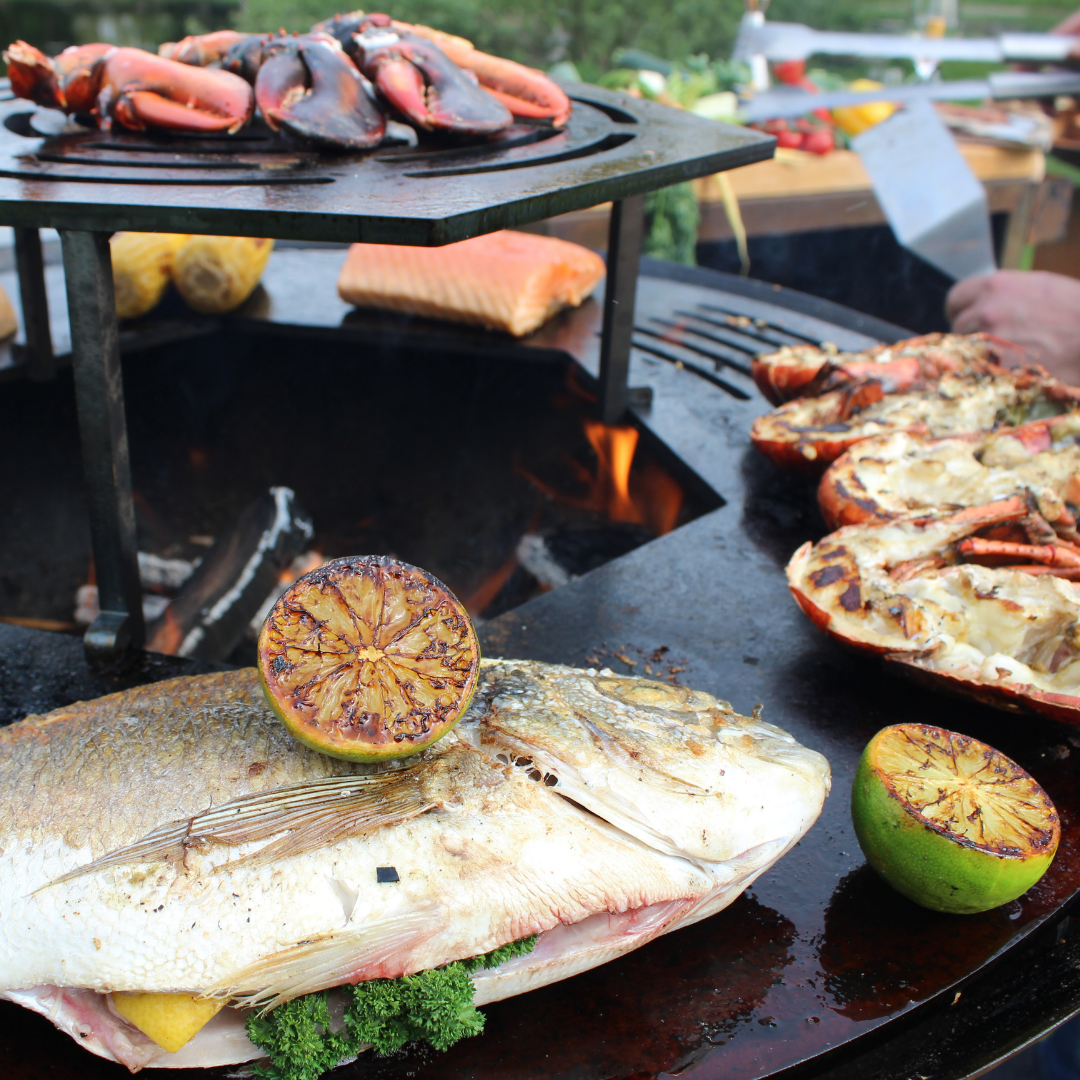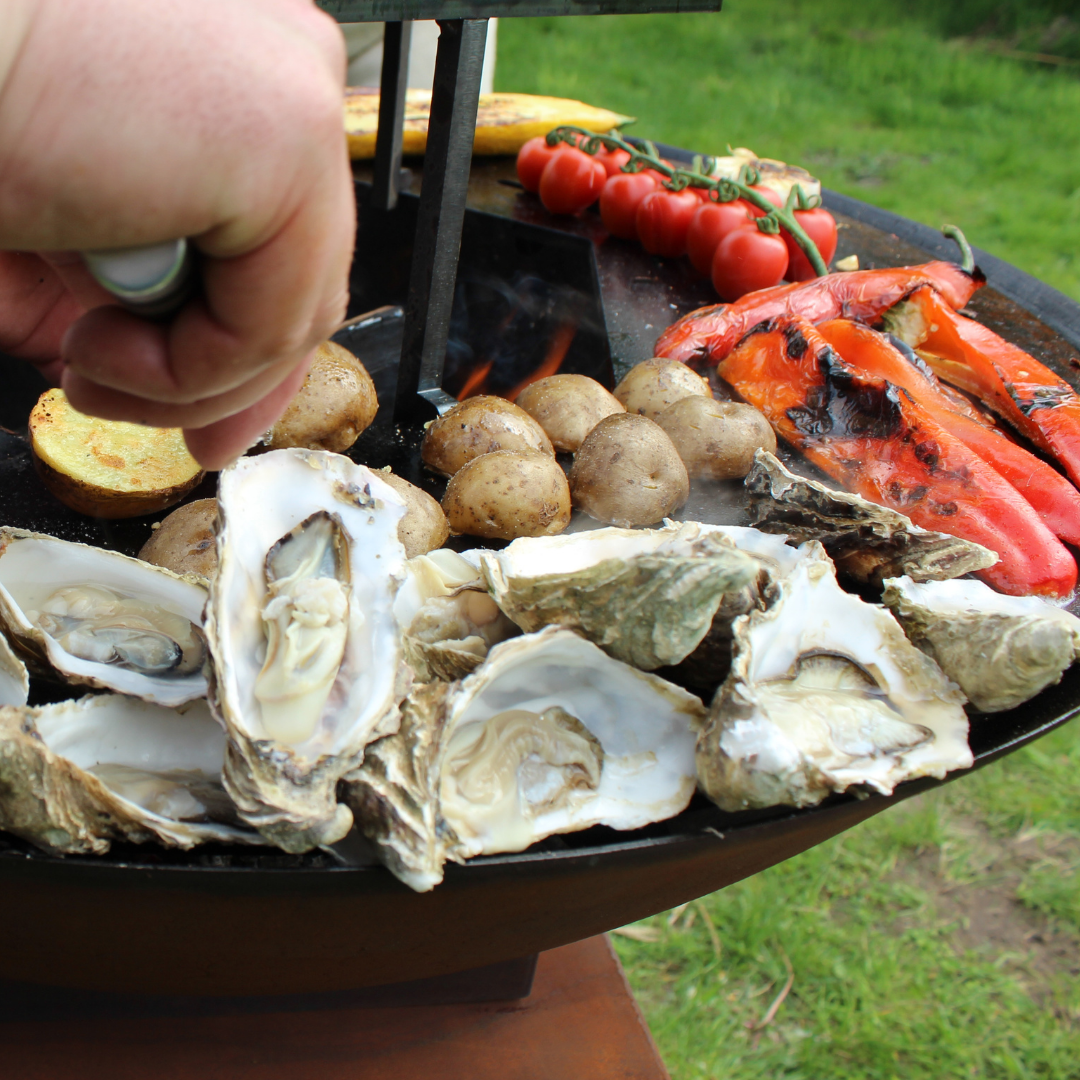

Cooking tuna on a plancha is all about control. Not long cooking times or heavy smoky flavours, but direct heat and a hot, flat cooking surface. That's exactly why a plancha works so well for tuna steaks. The outside quickly develops colour while the centre stays tender and juicy.
When searing tuna, everything comes down to timing and temperature. Just a few seconds too long on the heat can immediately change the texture. A hot plancha creates a thin, caramelised crust without drying out the fish. This gives tuna a completely different texture from cooking it in a pan or grilling it over an open grate.
Tuna is also a practical choice for outdoor cooking. It's quick and easy to prepare and works perfectly in a relaxed setting where several dishes are cooking on the plancha at the same time. Especially on larger cooking surfaces, there's still plenty of room for vegetables, citrus or thinly sliced potatoes.
Why tuna works so well on a plancha
A flat cooking surface provides direct contact across the entire surface of the fish. This quickly creates an even crust without delicate parts of the tuna sticking to a grill grate. On a hot plancha BBQ, you can also work more precisely with different heat zones.
Tuna is naturally quite lean, which means the fish reacts strongly to changes in temperature. A plancha allows you to keep the heat stable, helping the centre stay pink while the outside lightly caramelises.
Thicker tuna steaks of around two to four centimetres give the best results. Thinner pieces cook through too quickly.
The right temperature for tuna
For searing, the plancha needs to be properly hot. The cooking surface can reach around 250°C before you add the tuna. The fish should react immediately as soon as it comes into contact with the steel.
A common mistake is starting too soon. If the cooking surface isn't hot enough, the tuna cooks gradually instead of searing quickly. As a result, you lose the tender centre that makes a perfectly seared tuna steak so appealing.
Use a small amount of neutral oil with a high smoke point. Too much oil works against you on a plancha and can reduce the direct heat of the cooking surface.
How long should you sear tuna?
The exact cooking time depends on the thickness of the steak and the temperature of the plancha, but a short sear is usually enough. For a tuna steak around three centimetres thick, a useful guideline is:
-
30 to 45 seconds per side for a very rare centre
-
45 to 60 seconds per side for a pink centre
-
More than 90 seconds per side will quickly result in tuna that is cooked all the way through
Don't press down on the tuna while searing. This causes it to lose moisture and interferes with the formation of the crust.
Let the fish rest briefly on a wooden board or warm plate after cooking. This helps prevent the juices from immediately running out when you slice the steak.
Which flavours work well with tuna on a plancha?
Tuna has enough flavour of its own to keep the seasoning fairly minimal. Sea salt and black pepper are often all you need when using high-quality fish.
For a little more depth, these combinations work particularly well on a plancha:
-
Sesame and lime
-
Soy sauce and ginger
-
Olive oil and lemon zest
-
A subtle smoky flavour from charcoal underneath the cooking surface
Heavy marinades containing lots of sugar are less suitable at high temperatures. They can burn quickly on the hot steel.
Keep things calm while cooking
Cooking tuna on a plancha is all about preparation. Once the fish hits the hot surface, everything moves quickly. Make sure your garnishes, seasonings and serving plates are ready beforehand.
That's also what makes plancha cooking so enjoyable during long evenings outdoors. While the tuna gets its quick sear, there's still space on the cooking surface for vegetables or small side dishes. On larger setups, such as a GrillRing BBQ or a wide fire bowl BBQ, you can easily combine different temperature zones without constantly moving everything around.
Ultimately, good tuna needs very little. A hot cooking surface, a short cooking time and careful timing make the difference between dry fish and a tuna steak with a tender centre and thin, perfectly seared crust.
🔥 Explore our fire bowls, GrillRings and plancha BBQ accessories.
🔥 Looking for more tips on cooking over fire? Discover our other blogs.