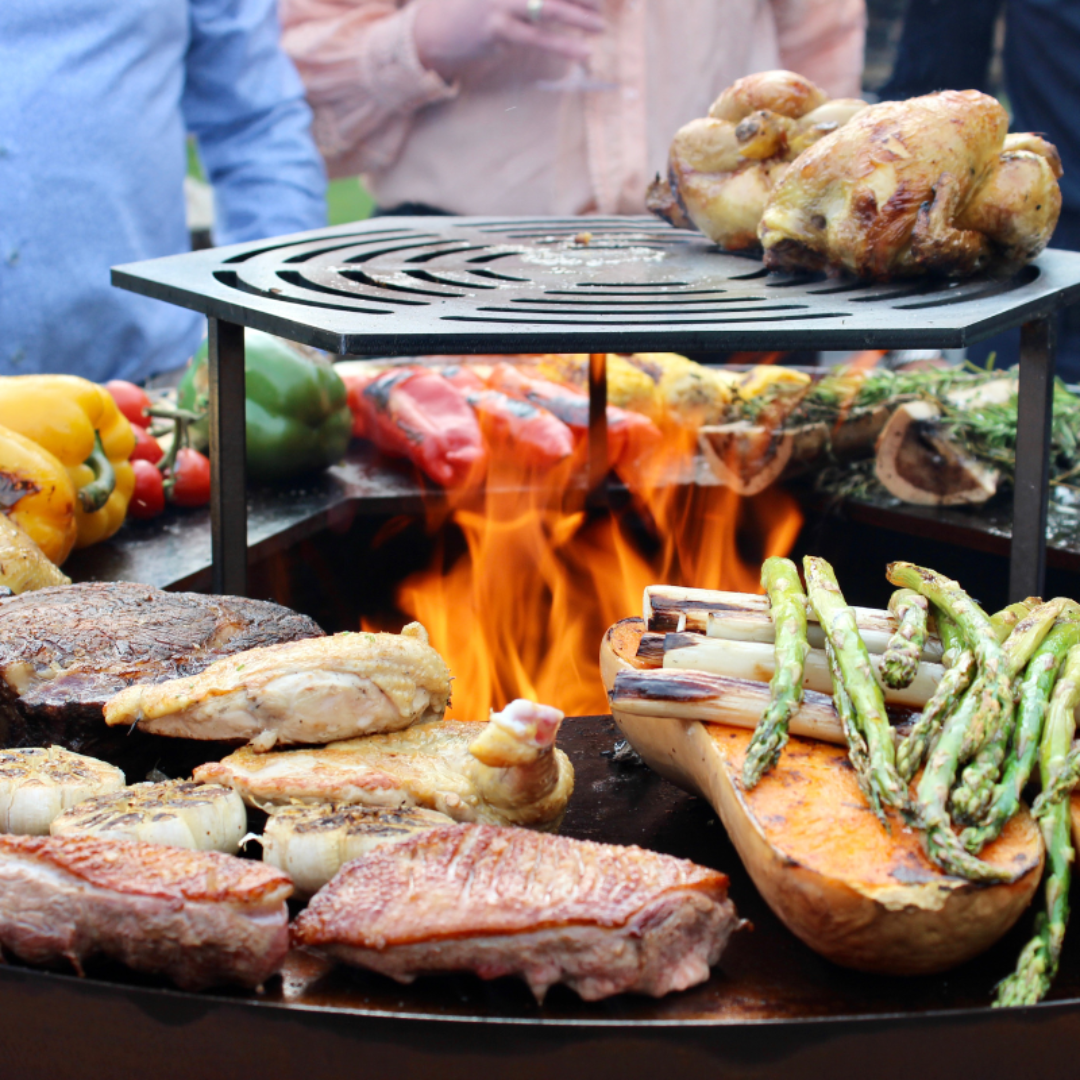

Cooking on a fire bowl with a plancha BBQ or GrillRing is about more than simply placing ingredients on a hot surface. The cooking surface consists of different heat zones, each with its own temperature and purpose. By understanding what happens in each area, you gain more control over your dishes and get the most out of outdoor cooking over fire.
The centre: maximum heat and intense searing
The centre of a fire bowl BBQ is the hottest area. The fire burns directly beneath the GrillRing, creating the highest temperatures on the cooking surface.
This is where you can quickly sear meat and develop a deep, caramelised crust. It's ideal for ingredients that need short, intense cooking, but it also requires attention and good timing.
The inner ring: controlled heat
Just outside the centre is a zone that's still hot, but easier to control. Here, ingredients can cook more gradually without immediately burning.
This makes it an ideal area for fish, smaller cuts of meat or dishes that need a little more time on the plancha BBQ. You still benefit from plenty of heat, but with more control over the cooking process.
The outer edge: gentle cooking and keeping food warm
The outer edge of the GrillRing has the lowest temperature. This zone is ideal for slowly finishing dishes or keeping food warm.
Vegetables can caramelise gradually here, while delicate ingredients are better able to retain their texture. Using this area allows you to slow down the cooking process and keep everything under control.
The power of combining different heat zones
The real advantage of a fire bowl BBQ comes from combining these different zones. By moving ingredients from the centre towards the outer edge – or the other way around – you can actively control flavour, caramelisation and cooking.
Instead of treating the GrillRing as one single cooking surface, you can use it as a complete outdoor kitchen with different heat zones for searing, gentle cooking and keeping food warm.
🔥 Explore our fire bowls, GrillRings and plancha BBQ accessories.
🔥 Looking for more tips on cooking over fire? Discover our other blogs.