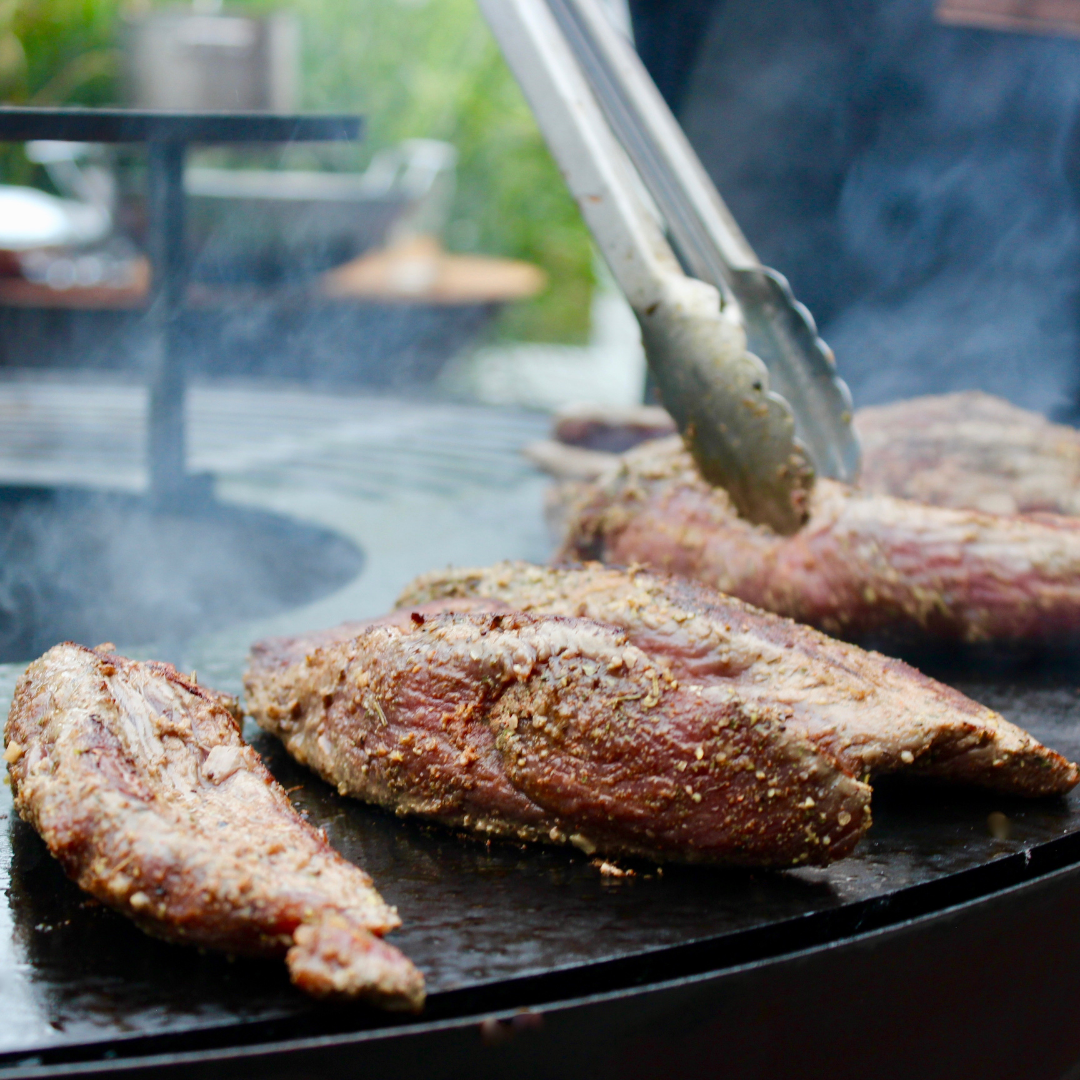

Pork belly works exceptionally well on a plancha. Its high fat content creates a deep flavour and crispy crust while keeping the meat juicy. It's exactly this combination that makes pork belly so well suited to direct contact with a hot cooking surface.
A plancha gives you plenty of control over both temperature and contact with the cooking surface. This allows the fat to render slowly without drying out the meat. The crust develops gradually, creating even caramelisation across the entire piece of pork belly.
When it comes to crispy pork belly, complicated techniques aren't necessary. Temperature control, timing and properly preparing the skin make the biggest difference.
Why pork belly works well on a plancha
A plancha keeps the meat in constant direct contact with the hot steel. This makes it easier to slowly render the fat than on a traditional grill grate. Especially with thicker pieces of pork belly, it helps prevent burnt edges while the inside is still too fatty.
On a plancha BBQ, you can also work with different temperature zones. The first stage of cooking usually takes place over medium heat so the fat can slowly render. Only towards the end do you increase the heat to make the outside properly crispy.
The same approach works for smaller pieces, such as pork belly strips or thick slices. Cook them gently first, then finish briefly over higher heat for extra texture.
Preparing the skin for a crispy crust
Most problems with pork belly come down to the skin. If it stays too moist, you'll end up with a tough layer instead of a crispy texture. Always pat the pork belly thoroughly dry before placing it on the plancha.
Lightly score the skin with a sharp knife. Don't cut too deeply; cutting through the skin is enough. This helps the fat escape during cooking and prevents the top layer from curling up.
Coarse salt works well for drawing additional moisture out of the skin. Ideally, leave the meat uncovered in the fridge for an hour before cooking.
The right temperature on the plancha
Using too much heat at the beginning is one of the quickest ways to ruin pork belly. The outside will darken rapidly while the fat has barely had time to render.
Instead, start on a medium-hot zone. Place the pork belly fat-side or skin-side down first so the fat can render gradually. You should hear a steady, gentle sizzle rather than aggressive frying.
Over time, you'll see the fat become more translucent and the meat begin to contract slightly. Only then should you move towards a higher temperature to create extra crispiness.
With thicker pieces, it helps to move the meat slightly across the plancha from time to time so you can keep control over any hotspots.
When pork belly becomes really crispy
Pork belly usually becomes truly crispy during the final stage of cooking. A common mistake is increasing the temperature too early. This burns the outside before enough of the fat has rendered.
Let the meat cook gently until it feels tender. Then increase the heat to make the outside dry and crispy. The skin in particular needs direct heat at this stage.
If necessary, press the meat down lightly with a spatula so the entire surface stays in contact with the plancha. This creates an even crust without pale spots.
Common mistakes when cooking pork belly on a plancha
-
Skin that's too wet: moisture prevents a crispy crust from forming.
-
Starting with too much heat: the outside burns before the fat has rendered.
-
Turning too often: pork belly needs time to develop a proper crust.
-
Not allowing enough resting time: slicing immediately can make the crust soften more quickly.
Let the meat rest for a few minutes on a grill rack or wooden board after cooking. This allows the juices to settle without making the underside soft from condensation.
Which plancha works best for pork belly?
For pork belly, stable heat distribution is particularly useful. A thick cooking plate retains heat better as the fat begins to render, preventing large temperature fluctuations during cooking.
If you regularly prepare larger cuts of meat, a more spacious cooking surface makes it easier to work with different heat zones. Both a compact plancha and a larger GrillRing BBQ can work well, as long as you have good control over the heat.
For longer wood-fire cooking sessions, a fire bowl BBQ also provides enough direct heat to slowly render the fat while building a firm, crispy crust.
🔥 Explore our fire bowls, GrillRings and plancha BBQ accessories.
🔥 Looking for more tips on cooking over fire? Discover our other blogs.