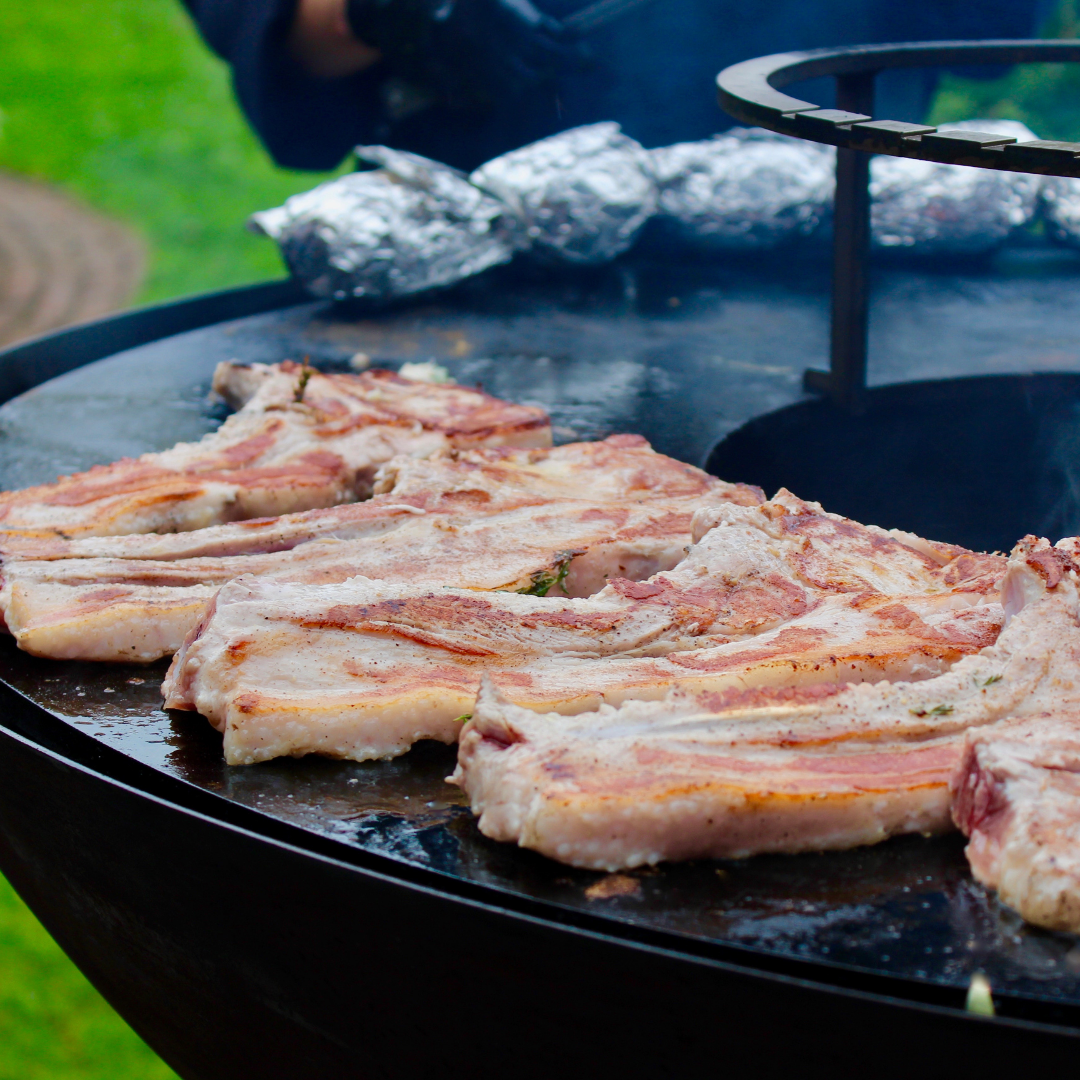

Pork neck and a plancha may not seem like an obvious combination at first. Pork neck needs long cooking times, controlled heat and plenty of patience, while a plancha is all about direct contact with high temperatures. Yet the two work surprisingly well together when you finish low & slow cooked pork neck on hot steel.
This approach works particularly well for larger groups. First, the pork neck is given several hours to cook slowly over a wood fire or indirect heat. Afterwards, you can slice the meat, pull it into pulled pork or cut it into larger pieces and briefly caramelise it on the plancha. This combines juicy, tender meat with a rich crust and extra grilled flavour.
That final step makes all the difference, not only in flavour but also in texture. The fat develops more character, sugars caramelise quickly and the outside gains a deeper flavour without drying out the meat.
Why pork neck works well on a plancha
Pork neck contains plenty of intramuscular fat and connective tissue. During low & slow cooking, these gradually break down, making the meat tender and juicy. This is exactly why pork neck responds so well to a hot finish.
On a plancha BBQ, the meat comes into direct contact with the steel. This creates even caramelisation across the entire surface. With pulled pork, it creates crispy edges. With thick slices of pork neck, it develops a deep crust without significantly cooking the inside any further.
An open grill grate often creates more direct flames and uneven heat. A plancha keeps fats and juices around the meat, giving you more control and helping to retain flavour.
The best method for low & slow pork neck
For this combination, always start with a gentle cooking process. Pork neck needs time to become tender. You can cook it over a wood-fired BBQ, on a GrillRing or in an enclosed setup using indirect heat.
A core temperature between 88 and 94°C usually works well for pulled pork. If you want to cut the pork neck into slices before finishing it directly on the plancha, you can keep the final temperature slightly lower so the meat retains a firmer texture.
Always let the meat rest afterwards. This helps retain moisture when the pork comes into contact with the hot steel.
When the plancha really adds value
The plancha isn't a replacement for low & slow cooking. It's a finishing step, and that's exactly where its added value lies.
With pork neck, you'll notice the difference particularly in three situations:
-
When pulled pork needs some extra texture
-
When thick slices need a crust without drying out
-
When you want to quickly finish several portions during social cooking
On a hot plancha, you can also work with butter, the meat's own juices or a light glaze without everything immediately dripping into the fire. This gives you more control over how the flavours develop.
Controlling the temperature on the steel
A common mistake is using a plancha that's too hot. Pork neck contains plenty of fat, while rubs and marinades often contain sugars. At extremely high temperatures, the outside can burn before a proper crust has time to develop.
Instead, use a medium-high to high heat zone on the steel. The meat should sizzle audibly without producing excessive smoke. Especially with pulled pork, it's important to work quickly. Cooking it for too long can rapidly dry out the delicate fibres.
Larger planchas naturally create temperature differences across the cooking surface. This makes it easy to temporarily move pieces to a gentler part of the steel when needed.
Serving pork neck during social cooking
Pork neck is ideal for long evenings outdoors. You can prepare most of it in advance and finish the meat on the plancha at the table. This keeps the cooking experience interactive without making guests wait too long.
This works particularly well on a GrillRing BBQ. The outer cooking ring provides plenty of space for finishing the meat while the fire in the centre continues to provide warmth and atmosphere.
Keep the combinations simple rather than turning them into overly complicated dishes. Thick slices of pork neck, grilled onion and something acidic are often all you need. The real flavour comes from the meat and its contact with the fire and steel.
Which types of wood work well with pork neck?
Pork neck generally works well with slightly stronger smoky flavours than more delicate cuts of meat. Oak and beech provide a stable, deep base without becoming overpowering. Fruit woods such as apple can be a good choice if you're looking for a milder balance.
For the final step on the plancha, the type of wood matters less than during the initial low & slow stage. Once the meat hits the steel, it's mainly about caramelisation and the development of the fat.
Combining plancha and fire with control
Stable temperatures are what make this combination work so well. Keep the fire steady during the slow cooking process and only use the plancha at the end for controlled, direct heat.
This fits perfectly with outdoor cooking over a wood fire. There's no need to rush or use complicated techniques. Instead, it's a cooking method where fire, steel and ingredients naturally work together.
🔥 Explore our fire bowls, GrillRings and plancha BBQ accessories.
🔥 Looking for more tips on cooking over fire? Discover our other blogs.