
A plancha grill plate works differently from a traditional BBQ grate. Instead of cooking over direct heat between the bars, you cook on a solid steel surface that retains and distributes heat evenly. This creates stable temperatures, controlled cooking and a style of outdoor cooking where fat, juices and marinades don't immediately disappear into the fire.
It's precisely this combination of high heat and controlled contact that makes a plancha suitable for a wide variety of ingredients. From thinly sliced vegetables to bavette, prawns or smashburgers. Everything cooks directly on the steel, giving you plenty of control over colour, texture and timing.
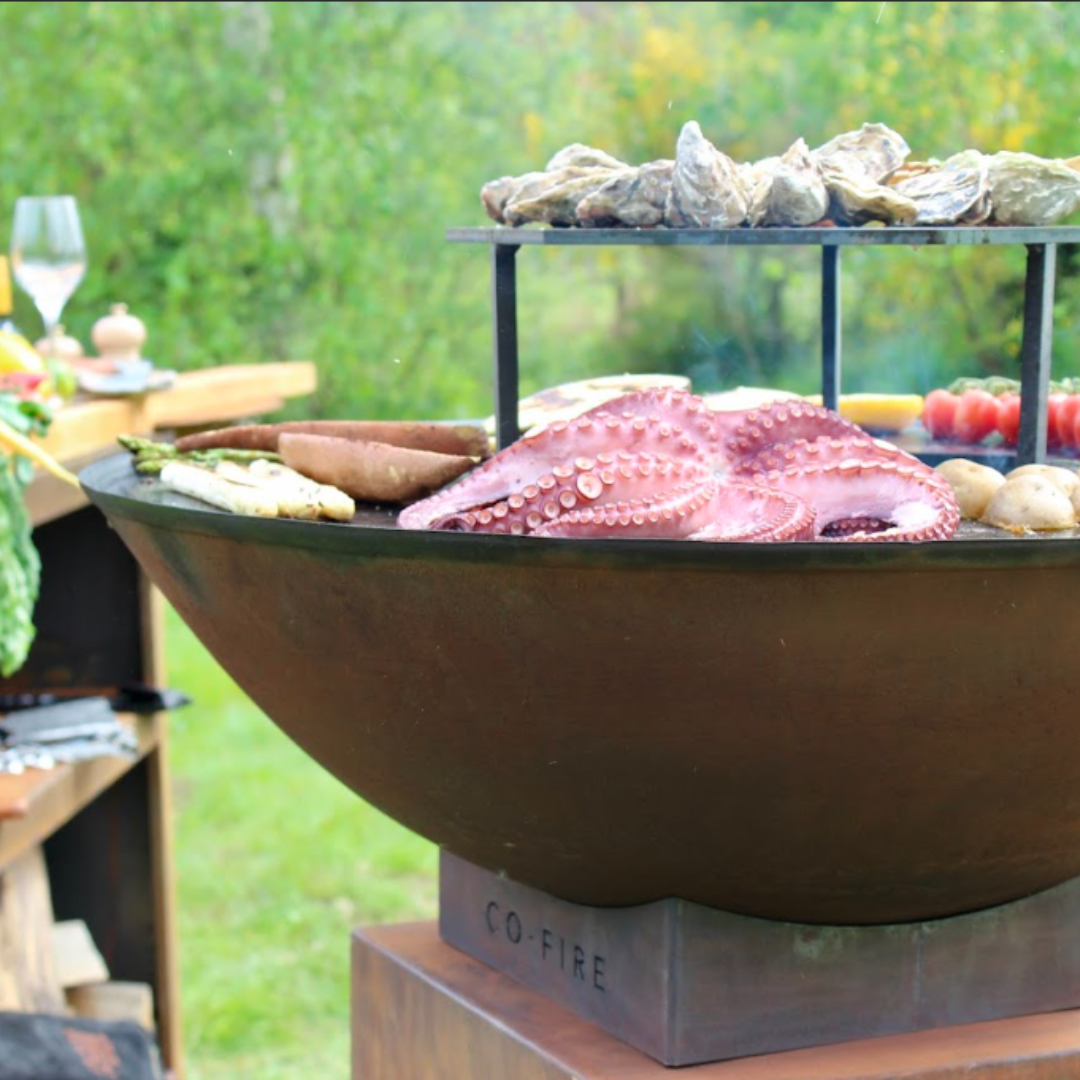
When cooking over a wood fire, heat distribution also plays an important role. A plancha grill plate creates different temperature zones across a single cooking surface. This allows you to sear, keep food warm and cook ingredients gently at the same time without constantly having to move charcoal or adjust grill grates.
How a plancha grill plate works
A plancha BBQ heats a thick steel plate from the centre or from underneath. The heat then gradually spreads across the cooking surface. The centre becomes the hottest, while the outer edges remain at slightly lower temperatures.
This naturally creates different heat zones. In the centre, you can quickly sear ingredients at high temperatures. Towards the outside, food can finish cooking more gently or be kept warm without drying out.
This principle makes a plancha particularly practical during longer cooking sessions. There's less need to constantly react to flare-ups from dripping fat or changing levels of direct heat, as you would with an open grill grate.
Why a plancha cooks differently from a grill grate
On a traditional grill grate, some of the moisture and fat is lost between the bars. On a plancha, these remain in contact with the cooking surface. This allows ingredients to caramelise more quickly and develop an even crust.
You'll notice the difference immediately with smaller ingredients. Prawns, finely chopped vegetables and smashburgers stay securely on the surface and cook evenly without falling through or breaking apart.
Marinades also behave differently on a plancha. Because liquids don't drip directly into the fire, more of their flavour remains on the cooking surface. At the same time, it's important to control the amount of oil and the temperature to prevent excessive smoke.
How heat spreads across the cooking surface
A plancha grill plate works by storing heat. Once the steel is fully up to temperature, it retains that heat relatively consistently. This provides stable cooking conditions, even when several ingredients are added at the same time.
On wood-fired models, you'll usually find a clear temperature gradient:
-
A hot inner zone for searing and quick cooking
-
A medium-heat zone for controlled cooking
-
A cooler outer edge for finishing or keeping food warm
Experienced outdoor cooks use these zones continuously. Rather than simply increasing the fire, they move ingredients strategically across the cooking surface.
Which dishes work well on a plancha?
A plancha grill plate works particularly well for ingredients that benefit from direct contact with heat. Think thin cuts of meat, fish, seafood or vegetables with a high moisture content.
Larger cuts of meat can also be prepared on a plancha. They're often seared first in the hot inner zone before being moved towards the outer edge to finish cooking more gently.
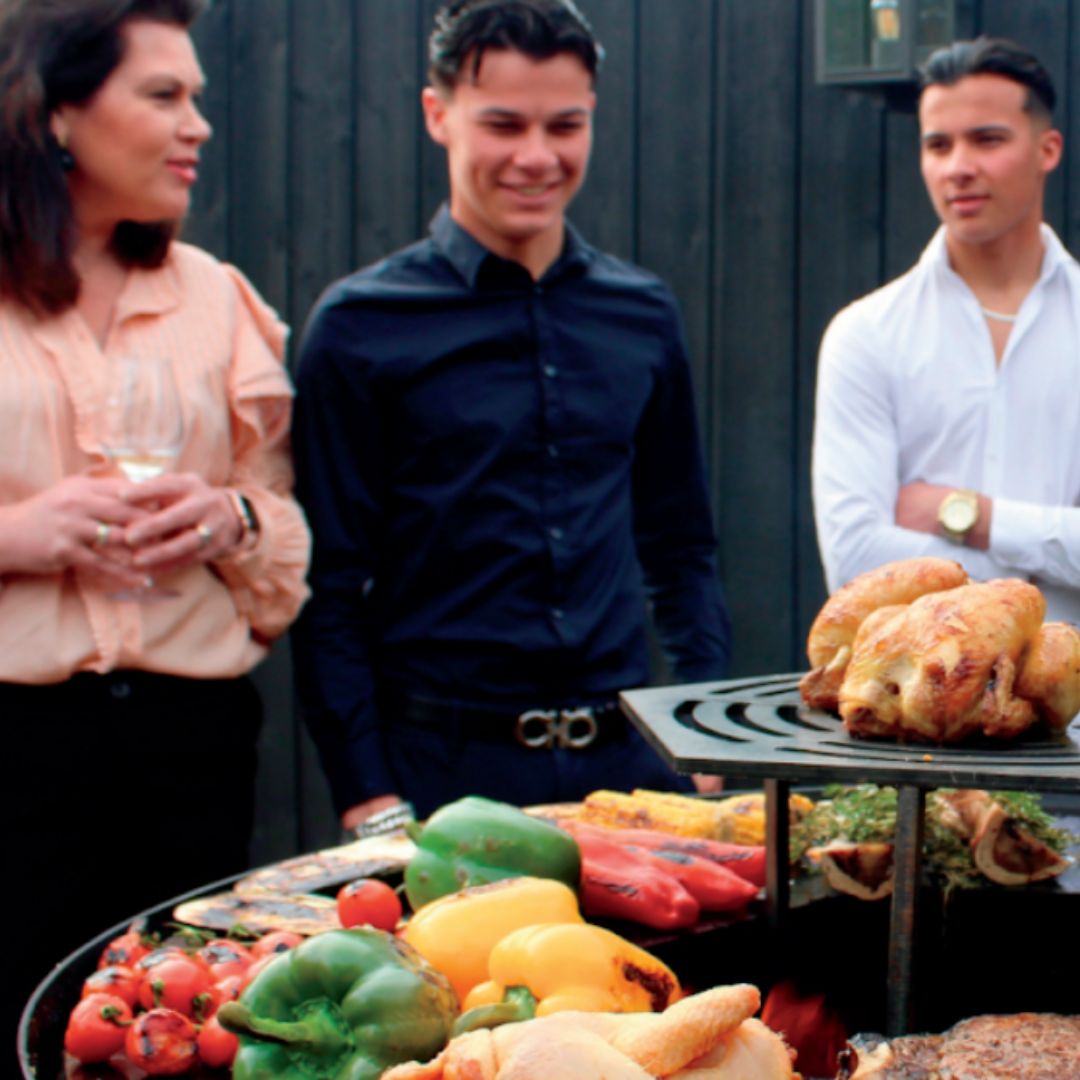
A plancha is also particularly practical for social cooking. Because the entire cooking surface can be used, several people can prepare different ingredients at the same time without needing separate pans or grill grates.
The difference between gas and wood fire
The basic principle of a plancha remains the same, but the heat source does affect the way you cook.
Gas-fired planchas respond more quickly to temperature adjustments and are easy to control precisely. A wood fire provides more radiant heat and gradually builds temperature in the steel cooking surface. This can create deeper crust formation and a more natural temperature gradient across the plate.
You'll find the same principle with a GrillRing BBQ or fire bowl BBQ. The steel cooking surface acts as a heat buffer, creating a more relaxed and consistent cooking process than grilling directly over an open fire.
Why a thick steel plate makes such a difference
The thickness of the steel largely determines how stable a plancha is during cooking. Thin steel responds quickly to temperature changes, but it also loses heat more quickly when cold ingredients are added. A thicker plate retains heat for longer and provides more consistent cooking conditions.
You'll notice this especially when cooking for several people. The temperature remains more stable, allowing meat to sear properly while vegetables retain their texture instead of beginning to steam.
This ability to store heat is exactly what makes a plancha ideal for long evenings of outdoor cooking, with the fire burning steadily and the cooking surface remaining ready to use throughout the evening.
🔥 Explore our fire bowls, GrillRings and plancha BBQ accessories.
🔥 Looking for more tips on cooking over fire? Discover our other blogs.