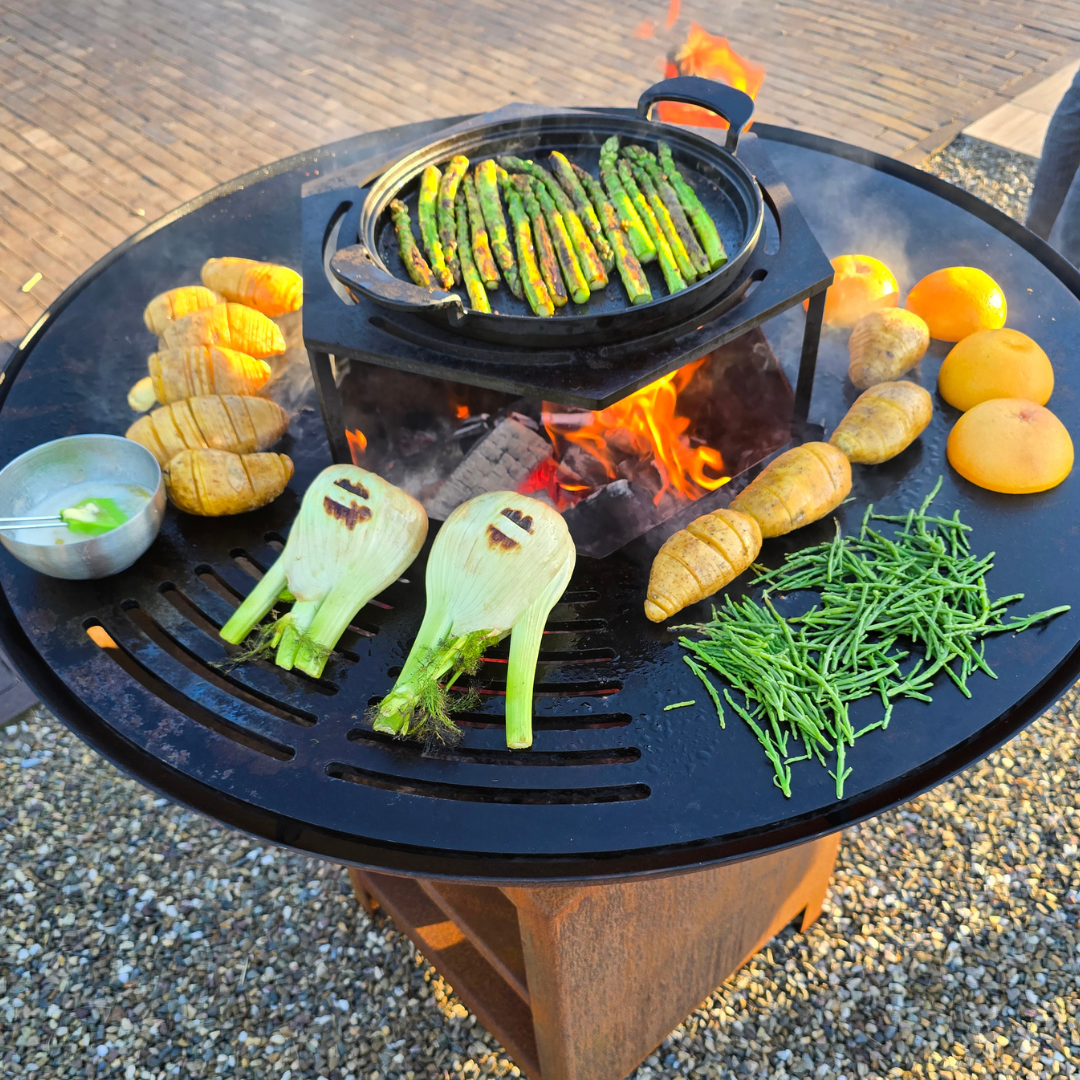

Anyone cooking on a steel cooking surface or GrillRing for the first time will immediately notice that it feels different from cooking on a traditional grill grate. Heat is distributed more evenly, ingredients remain stable on the surface and fat or moisture doesn't immediately disappear into the fire. This changes not only the flavour, but also the entire outdoor cooking experience.
Especially when cooking over a wood fire, steel creates a different dynamic. It responds gradually and predictably to changes in temperature, creating a more relaxed cooking process. Instead of working mainly with direct flames, you cook on a consistently hot surface where meat, vegetables and fish can cook evenly.
In premium outdoor kitchens and plancha BBQs, steel is therefore much more than a detail. It's a defining part of the cooking experience. The combination of thermal mass, heat retention and direct contact heat creates a style of cooking that's closer to professional griddle cooking than traditional barbecuing.
Direct contact with heat changes the cooking process
On a plancha BBQ or GrillRing, ingredients are in full contact with the steel. This creates a different type of heat transfer compared with a grill grate, where food is mainly heated by hot air and flames.
This direct contact helps create an even crust without quickly drying out the food. Burgers retain more juiciness, vegetables caramelise more gradually and delicate ingredients such as prawns or thinly sliced vegetables are easier to control.
Steel also makes it easier to work with different heat zones. Temperatures are higher closer to the fire, while the outer edge provides gentler heat. This naturally creates practical zones for different stages of cooking.
Steel retains heat for longer
One important difference is the thermal mass of steel. Once a thick steel cooking surface is fully up to temperature, it retains that heat consistently. Even when several ingredients are added at the same time, the temperature drops less quickly than it would on a thin grill grate.
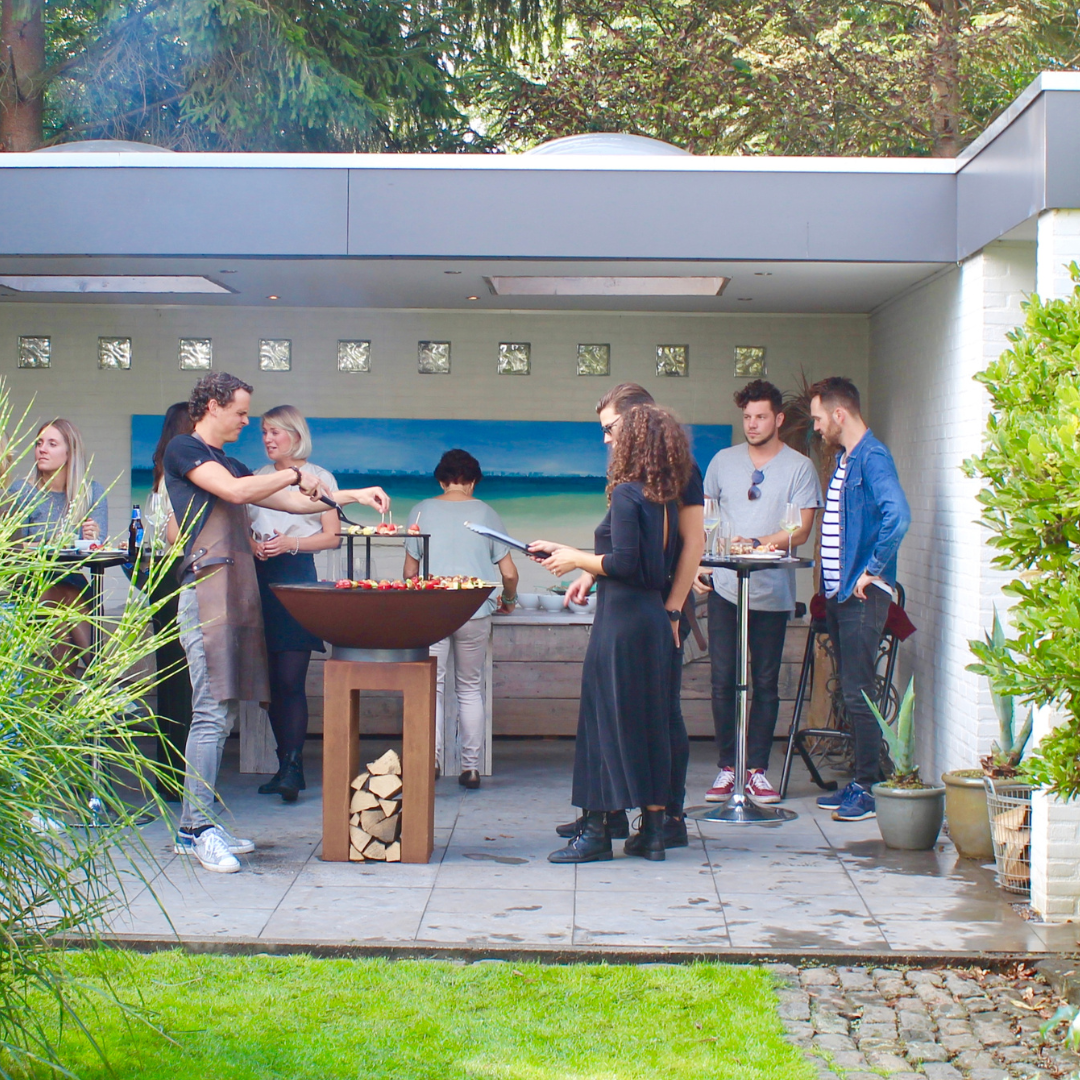
This is particularly noticeable during social cooking. When several people are cooking at once, or meat and vegetables are continuously being added to the surface, cooking conditions remain more consistent. There's less need to constantly adjust airflow or add more wood.
When cooking over a wood fire, this gives you more control. The fire remains important, but the steel acts as a stable buffer between the flames and the ingredients.
Fat and juices remain part of the cooking process
On a traditional grill grate, fats and moisture drip directly into the fire. On steel, they remain on the cooking surface instead. This creates different flavours and textures.
Cooking fats mix with meat juices, vegetables can pick up flavours from other ingredients and food can caramelise gradually without immediately burning. This makes cooking on steel particularly suitable for dishes where texture and crust formation are important.
At the same time, temperature control still matters. If the steel becomes too hot, the outside can burn before the inside has finished cooking. Experience therefore isn't only about managing the fire, but also about learning to read the steel cooking surface.
Cooking on steel feels more relaxed during longer sessions
During long evenings of outdoor cooking, there's a noticeable difference in how you use a steel cooking surface. It requires less constant attention than grilling directly over open flames.
Ingredients can temporarily be moved to a cooler zone without having to remove them from the BBQ completely. Bread, vegetables or slow-cooked meat can be kept warm more easily without continuing to cook too quickly. Especially on larger GrillRing BBQs, this creates a natural way of cooking together.
This controlled heat also makes steel ideal for combining searing, gentle cooking and keeping food warm on the same surface.
Flavour development is more subtle than with open-flame grilling
Many people immediately associate barbecuing with strong smoky flavours and distinctive grill marks. Cooking on steel is more subtle. Because ingredients cook directly on the hot surface, they develop roasted and caramelised flavours rather than intense charred notes.
You'll notice this difference especially with vegetables, fish and thinly sliced meat. Ingredients retain more of their natural flavour while still gaining depth from the wood fire and the heat of the steel.
With a fire bowl BBQ, you get a combination of the atmosphere of an open fire and the control of cooking on steel that's difficult to compare with traditional grilling.
🔥 Explore our fire bowls, GrillRings and plancha BBQ accessories.
🔥 Looking for more tips on cooking over fire? Discover our other blogs.