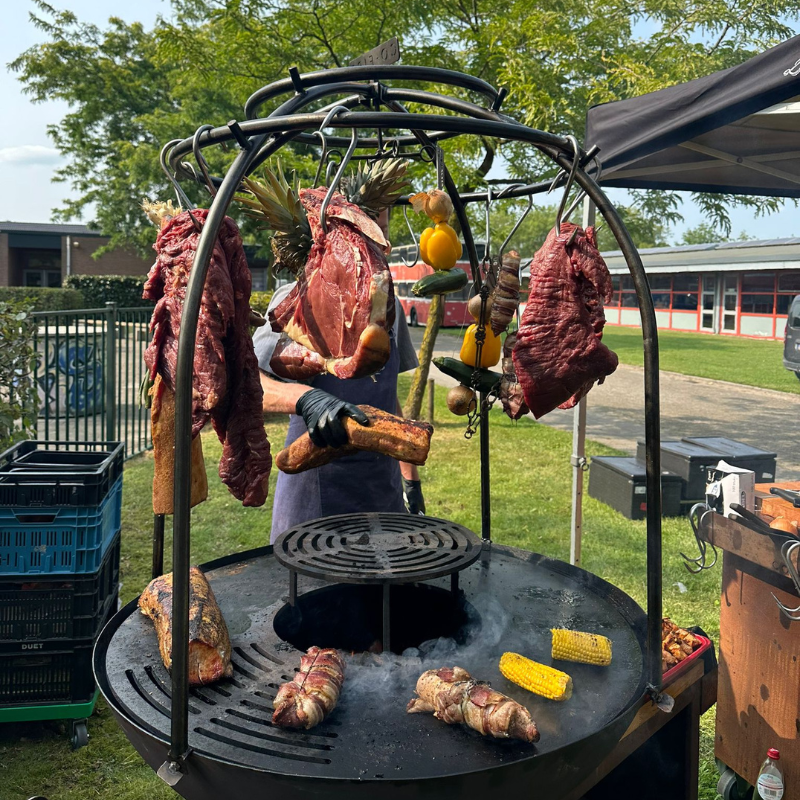

Picanha is at its best when cooked over a real fire. The fat cap protects the meat from direct heat while adding flavour, juiciness and a deep crust. That's exactly why this cut of beef is becoming increasingly popular on a plancha or GrillRing BBQ, where high temperatures and controlled heat zones come together.
When cooking picanha over an open fire, you'll quickly notice that timing matters more than complicated techniques. Too much heat can burn the fat before the meat is cooked. Too little heat won't create enough of a crust. A stable wood fire with plenty of glowing embers makes all the difference.
Picanha is also practical when cooking for larger groups. The meat can rest gently around the edge of the fire while you slice off thin pieces to serve throughout the evening. This makes it particularly well suited to relaxed outdoor cooking with everyone gathered around the fire.
Which BBQ works well for picanha?
A wide cooking surface or GrillRing gives you plenty of control over different temperature zones. On a GrillRing BBQ, you can first sear the picanha over direct heat and then move it towards the outer edge of the cooking surface to finish more gently.
A plancha BBQ also works particularly well for picanha, especially when you first bring the meat up to temperature indirectly and then finish it briefly over high heat for an extra crust. The fat cap gradually renders without constantly causing flare-ups.
With an open fire bowl BBQ, you get more direct interaction with the fire. This creates a stronger wood-fired flavour, but requires a little more attention to dripping fat and temperature control.
Why the fat cap makes the difference
Picanha without its fat cap loses much of its character. During cooking, the fat gradually renders while helping protect the meat from drying out. Over an open fire, this layer of fat also protects the beef from intense heat coming from below.
A common mistake is scoring the fat too deeply. A few small, shallow cuts are enough. These help the fat render more evenly without causing the meat to lose unnecessary moisture.
At high temperatures, the fat often develops a thin, crispy outer layer. It's exactly this contrast between roasted fat and pink, juicy beef that makes picanha so well suited to wood-fire cooking.
Direct or indirect cooking?
Picanha usually benefits from a combination of both. Start by gently bringing the meat up to temperature away from the hottest part of the fire. Then finish it briefly over direct heat to develop colour and a deep crust.
With thicker pieces, this approach prevents the outside from becoming too dark while the centre is still undercooked. This is particularly useful when cooking over a wood fire, where temperatures naturally fluctuate.
If you cut the picanha into thinner steaks, you can cook them entirely over direct heat. In that case, an extremely hot plancha or GrillRing works particularly well for fast caramelisation.
Charcoal or wood fire?
For picanha, hardwood can add more depth of flavour than standard charcoal. Oak and beech create a stable bed of embers with enough heat to develop a strong crust. Softer woods burn more quickly and provide less consistent temperatures.
A fire with large flames is less suitable than a bed of glowing embers. The fat from the picanha can otherwise cause sudden flare-ups that leave the outside tasting bitter.
A small active fire zone next to the glowing embers is a practical setup. It allows you to build up extra heat when needed without disrupting the entire cooking surface.
How do you know when picanha is ready?
Picanha is usually best served between medium rare and medium. At this level of doneness, the fat has enough time to soften while the meat remains juicy.
Always let the meat rest for a few minutes after grilling. When cooking over an open fire, the internal temperature will often continue to rise slightly during this time. Then slice the picanha against the grain for a more tender bite.
When cooking a larger piece, serving it in several rounds works particularly well. Slice off a few pieces at a time and, if necessary, return the remaining picanha to the edge of the fire briefly. This keeps the meat warm without overcooking it.
🔥 Explore our fire bowls, GrillRings and plancha BBQ accessories.
🔥 Looking for more tips on cooking over fire? Discover our other blogs.