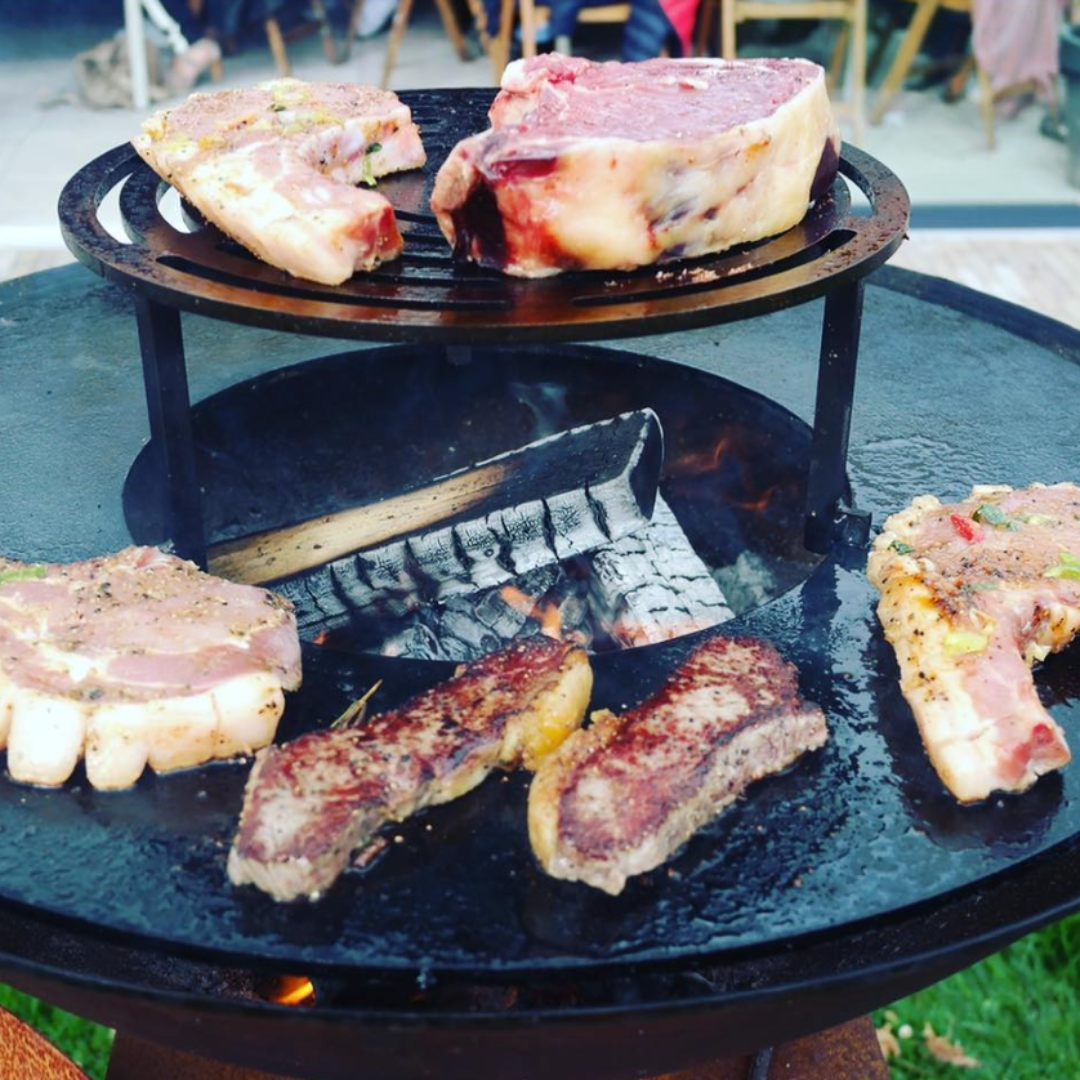

Ribeye is at its best when cooked over direct heat. On a GrillRing, you get exactly the combination of high heat, controlled cooking and deep crust formation that a good cut of beef needs. The wide steel cooking surface retains heat consistently, giving you more control than a traditional grill grate.
When cooking ribeye on a GrillRing, it's mainly about timing and temperature. The meat doesn't need complicated preparation. A good ribeye has enough fat and texture to develop plenty of flavour through heat and resting alone. That's exactly why a GrillRing works so well for this type of steak.
Anyone who regularly cooks outdoors over a wood fire will quickly notice that a GrillRing provides more control during long evenings around the fire. There's plenty of space to cook several steaks at once without constantly having to manage flames or hotspots.
Why ribeye works well on a GrillRing
A wide steel cooking surface creates an even Maillard reaction across the entire surface of the meat. This develops a deep crust without some areas burning while others remain pale. On a GrillRing BBQ, you can also work with different heat zones, which is particularly useful for thicker ribeyes.
The fat structure of ribeye plays an important role here. As the steak cooks, the intramuscular fat gradually renders onto the cooking surface. This adds extra flavour and helps prevent the meat from drying out. Especially when cooking over a wood fire, you get a rich, subtly smoky flavour without overpowering the steak.
The right temperature for ribeye
Many people place ribeye on the GrillRing too early. The cooking surface needs to be properly hot before adding the meat. A temperature at which a thin layer of fat immediately begins to sizzle usually works best.
A GrillRing naturally creates different temperature zones. The centre is hotter, while the outer edge provides gentler heat. Use the hotter area to develop the crust, then move the steak slightly towards the outside if necessary to bring it to the desired internal temperature without exposing it to intense heat.
For a ribeye around 3 centimetres thick, the following works well in practice:
-
2 to 3 minutes per side for medium rare
-
Then let the steak rest briefly on the outer section of the cooking surface
-
Add coarse salt only after cooking
There's usually no need to turn the steak too often. On a stable GrillRing, leaving the meat undisturbed for a while helps create better caramelisation.
Using fat on the GrillRing
Ribeye naturally contains plenty of fat, but a thin layer of beef fat or neutral oil on the cooking surface helps create good contact with the steel. Especially with a new GrillRing, this can help prevent sticking.
Butter is often added too early. At high temperatures, butter can quickly burn on the cooking surface. If you want to add extra flavour, it's better to melt a small knob of butter over the steak at the end while it rests.
Resting makes a noticeable difference
Cutting into the steak immediately causes a lot of the juices to escape onto the board. A short resting time of around 5 minutes gives a noticeably better result. The heat distributes more evenly throughout the meat and the texture remains firmer.
On a GrillRing, you can easily do this by temporarily moving the ribeye to the cooler outer edge of the cooking surface. This keeps the meat warm without continuing to cook it aggressively.
Common mistakes when cooking ribeye over a wood fire
Cooking a steak that's too cold is a common mistake. Placing ribeye straight from the fridge onto a hot GrillRing can result in a heavily seared outside while the centre remains too cool. Let the meat come closer to room temperature before cooking.
Over-seasoning rarely improves a good ribeye either. Pepper can burn quickly on hot steel and overpower the natural flavour of the meat. Coarse salt after cooking, followed by a little pepper after slicing if desired, usually gives a better result.
When cooking over an open fire, wet wood or unstable heat can also have a major impact on the cooking process. Dry hardwood provides a more consistent temperature and a cleaner flavour.
Which GrillRing works best for steaks?
For ribeye, stability and the thickness of the cooking surface are particularly important. A heavy steel plate retains heat for longer when several steaks are placed on the GrillRing at the same time. This makes it easier to achieve consistent results during longer dinners or when cooking for larger groups.
Anyone who regularly prepares steaks, burgers or other dishes over direct heat will often benefit from a larger cooking surface with several temperature zones. Within the Co-Fire range, fire bowl BBQs and complete GrillRing setups are often used for exactly this style of outdoor cooking.
🔥 Explore our fire bowls, GrillRings and plancha BBQ accessories.
🔥 Looking for more tips on cooking over fire? Discover our other blogs.