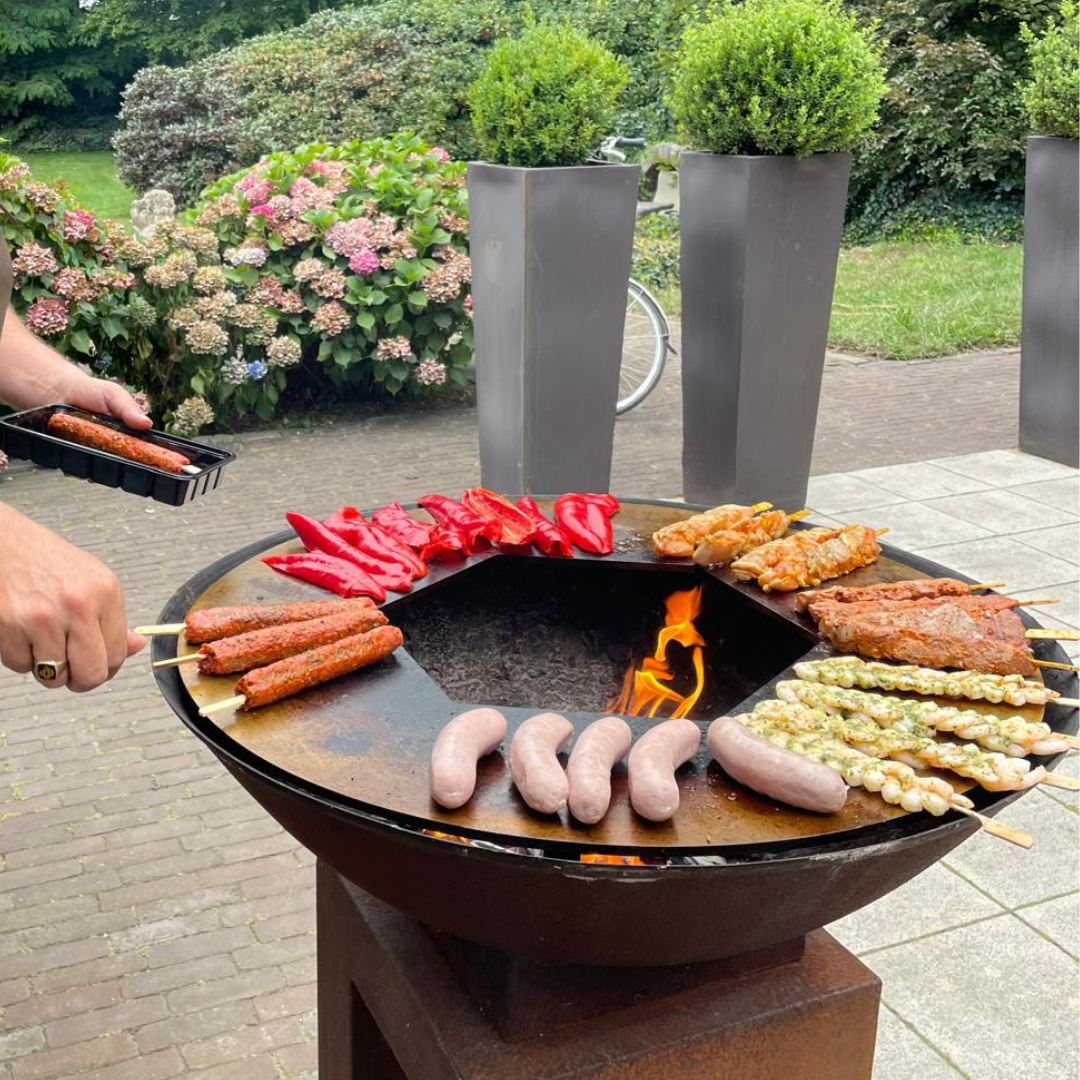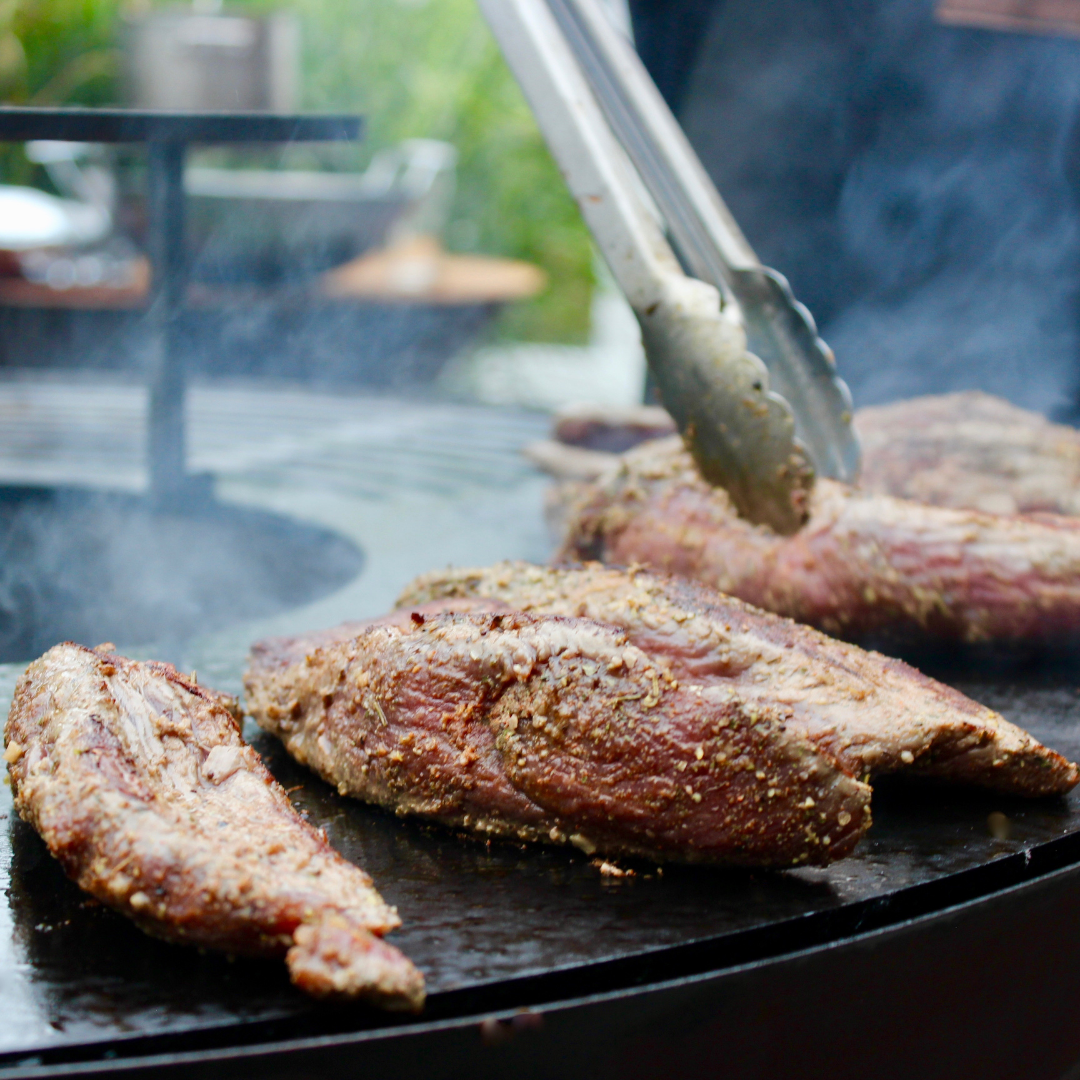

Cooking spare ribs on a fire bowl BBQ requires control over heat, timing and positioning around the fire. That's exactly why this style of outdoor cooking works so well for ribs. You can combine slow cooking with direct caramelisation without drying out or burning the meat.
An open fire gives spare ribs a deeper smoky flavour than a standard gas BBQ. At the same time, it requires more attention to temperature zones and fuel. Especially on a wide GrillRing or fire bowl with a cooking plate, there's plenty of space to cook the ribs gently before finishing them over higher heat.
For longer cooking sessions, many outdoor cooking enthusiasts therefore choose a spacious fire bowl BBQ with a stable wood-fire zone. This gives you more control during slow cooking while leaving enough space for sauces, vegetables or additional grilling.
Why spare ribs work well on a fire bowl BBQ
Spare ribs need time. They don't require extremely complicated techniques, but they do need consistent heat. A fire bowl BBQ works particularly well because you can easily create several temperature zones. Directly above the fire, you have high heat for finishing the ribs. Towards the outer edge, the temperature is gentler, making it ideal for slow cooking.
A GrillRing or wide plancha also provides more even heat distribution. This prevents direct contact with high flames, which can quickly burn the sugars in marinades. Especially with ribs finished with a glaze containing honey, sugar or apple syrup, this makes a noticeable difference.
The type of wood also matters. Oak and beech provide stable heat and a subtle smoky flavour that works particularly well with pork. Softer woods burn more quickly and make temperature control more difficult during longer cooking sessions.
Preparing spare ribs for a juicy result
Good spare ribs start with preparation well before you light the fire. Remove the membrane from the back of the ribs so the seasoning and smoke can penetrate the meat more effectively. Then apply a dry rub with salt, pepper and a limited amount of sugar. Over an open fire, sugars caramelise more quickly than they would in an enclosed smoker.
Let the ribs rest for at least an hour afterwards. This helps the seasoning adhere to the meat and creates a firmer bark during cooking.
A common mistake is using too much heat as soon as the ribs go onto the BBQ. This has the opposite effect. The fat renders too quickly, causing the meat to dry out before the collagen has had enough time to break down.
Cooking spare ribs indirectly over an open fire
When cooking spare ribs on a fire bowl BBQ, indirect heat is key. Don't place the ribs directly above the centre of the fire. Instead, position them towards the edge of the GrillRing or on a gentler part of the cooking surface.
A stable base of burning wood and glowing embers works better than constantly adding new logs. Large temperature fluctuations make the cooking process less consistent and increase the risk of burnt edges.
For most spare ribs, a gentle cooking process of several hours works best. During this stage, you don't need to do much apart from turning the ribs and checking that they aren't drying out. If necessary, you can occasionally spray them lightly with apple juice or a mixture of vinegar and water.
When to glaze and finish the ribs
The final stage often determines the texture of the outside. Only apply your glaze or sauce once the ribs are almost cooked. Adding it too early increases the risk of burning the sugars.
Then move the ribs briefly towards a hotter zone so the sauce can caramelise. This only needs a few minutes per side. On a fire bowl BBQ, you can immediately see how fat, smoke and heat come together to create the final crust.
It's exactly this combination that makes wood-fire cooking different from preparing ribs on an enclosed BBQ. The outside develops more texture while the inside stays juicy.
Which fire bowl works best for spare ribs?
When cooking spare ribs, having enough space is particularly important. A compact fire bowl works well for shorter grilling sessions, but during longer cooks you'll quickly notice the advantages of a larger GrillRing or plancha setup.
A wide cooking surface gives you enough room to create different temperature zones without constantly moving the ribs around. That's why many outdoor cooks choose a combination of open fire and a plancha-style cooking surface, such as a GrillRing BBQ set.
If you regularly slow-cook meat over a wood fire, it's also useful to keep a larger supply of wood close to the BBQ. This means you can maintain a stable fire without having to rebuild the heat throughout the cooking process.
Common mistakes when cooking spare ribs over a wood fire
-
Too much direct heat: the outside burns before the meat becomes tender.
-
Adding sauce too early: sugars burn quickly over an open fire.
-
Unstable fire management: constantly adding wood creates temperature fluctuations.
-
Not allowing the ribs to rest: spare ribs become more tender when they're given a short rest after cooking.
The more often you cook over a wood fire, the more you'll notice that a calm, controlled approach usually produces better results than constantly adjusting the fire. Especially with spare ribs, stable heat makes a noticeable difference to both texture and juiciness.
🔥 Explore our fire bowls, GrillRings and plancha BBQ accessories.
🔥 Looking for more tips on cooking over fire? Discover our other blogs.