
Cooking a steak on a plancha BBQ requires a different approach from grilling over an open grill grate. Direct contact with the hot steel creates an even crust, controlled cooking and helps retain more of the meat's juices. Thicker steaks in particular benefit from this method.
On a plancha BBQ, direct heat is distributed across a large cooking surface. This allows you to cook several steaks at the same time without the surface immediately losing too much heat. It also makes it easier to control crust formation, resting and timing.
Anyone who regularly cooks outdoors will quickly notice that small details make a big difference. The temperature of the meat, when you add salt and where you position the steak on the plancha all affect how evenly it cooks inside and out.
Which steak works well on a plancha BBQ?
Steaks with enough fat generally give the best results on a plancha. Ribeye stays juicy thanks to its marbling, while entrecôte develops a strong crust without drying out too quickly. Picanha and bavette also work well, provided the meat is cut thick enough.
Thin steaks are more difficult to control on a hot plancha. They brown quickly but also lose moisture more easily. A thickness of around 3 to 4 centimetres gives you more control over the level of doneness.
Take the meat out of the fridge around 30 to 45 minutes before cooking. Placing a cold steak directly onto hot steel can result in a heavily seared outside while the centre remains too cool.
The right temperature on the plancha
Steak requires a high surface temperature. The plancha should be hot enough for the meat to react immediately when it comes into contact with the steel. A light amount of smoke from the oil on the cooking surface is a good indication that the plancha is ready.
There will almost always be some temperature difference between the centre and outer sections of a plancha. Use the hottest area for searing and a gentler section to finish cooking the steak.
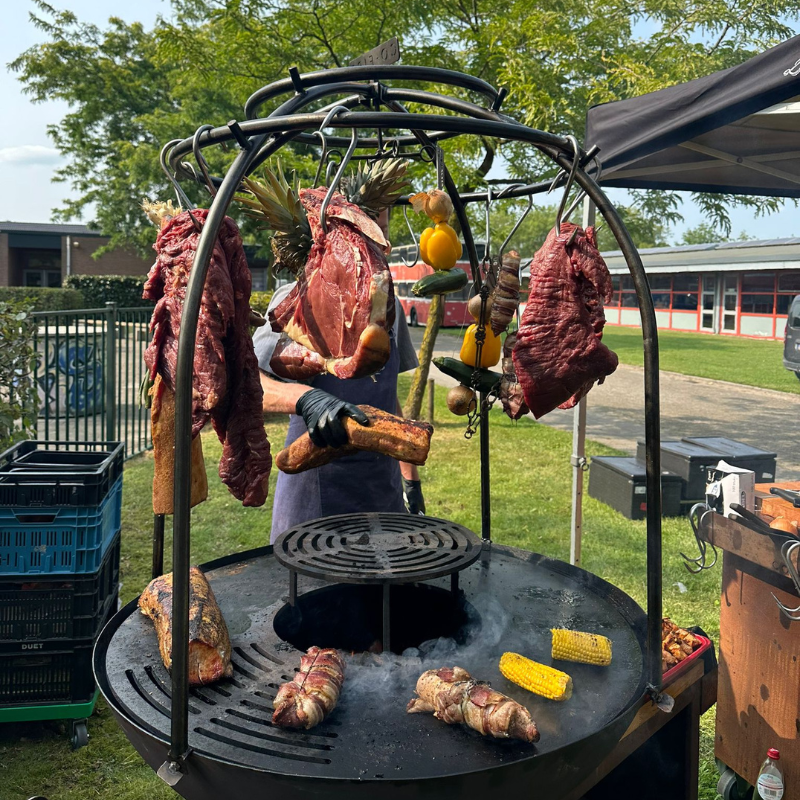
On larger wood-fired models or a GrillRing BBQ, this natural heat distribution creates different temperature zones, making it easier to cook several steaks with control.
How to cook a steak on a plancha
Pat the meat dry before placing it on the plancha. Moisture on the surface slows down crust formation. Use an oil with a high smoke point, such as grapeseed or peanut oil.
Place the steak on the hottest zone and don't move it during the first minute. This gives the surface enough time to caramelise evenly. Turn it once a dark, dry crust has developed.
With thicker steaks, a short period of intense heat works better than prolonged cooking at a high temperature. Many outdoor cooks therefore combine direct searing with gentler cooking towards the edge of the plancha.
-
Rare: internal temperature around 48–50°C
-
Medium rare: internal temperature around 52–54°C
-
Medium: internal temperature around 56–58°C
Always let the steak rest for a few minutes after cooking on a warm board or grill grate. This allows the juices to redistribute throughout the meat.
Common mistakes when cooking steak on a plancha
A common mistake is overcrowding the plancha. When several cold steaks are added at the same time, the temperature of the steel can drop quickly. Instead of searing, the meat then begins to steam.
Turning the steak too early is another common mistake. A steak will naturally release from the steel once a proper crust has formed. Forcing it loose can damage the crust and cause unnecessary loss of juices.
Heavy marinades containing sugar are less suitable for the high temperatures of a plancha. They burn quickly and can create a bitter flavour. A simple combination of salt and pepper usually works better.
Cooking steak over a wood fire
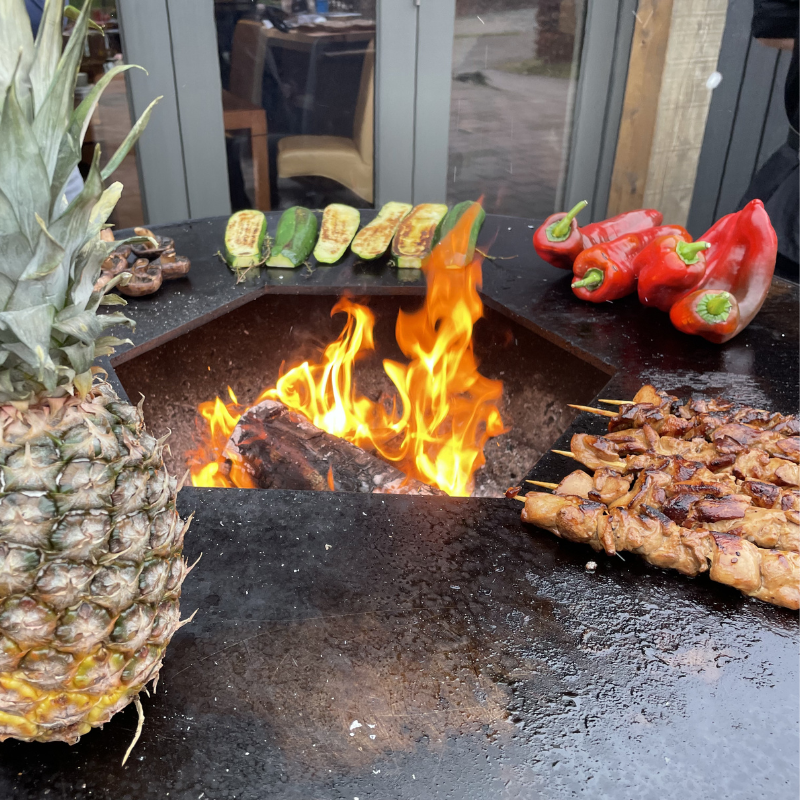
On a wood-fired plancha, the heat naturally changes throughout the cooking process. This requires a little more attention, but also gives you more control over flavour and different temperature zones.
Hardwoods such as oak or beech provide stable heat without producing an overpowering smoky flavour. Especially during longer cooking sessions, this helps keep the plancha at a more consistent temperature.
Anyone who wants to combine the character of wood-fire cooking with a larger cooking surface can opt for a fire bowl BBQ or plancha setup with several heat zones.
Which oil should you use on a plancha?
Not every oil is suitable for the high temperatures of a plancha BBQ. Extra virgin olive oil has a relatively low smoke point and can burn more quickly. An oil with a higher smoke point gives you more control and reduces the risk of burnt flavours.
You only need a small amount. There's no need to completely cover the plancha in oil. A thin layer on the meat itself is usually enough to prevent sticking.
🔥 Explore our fire bowls, GrillRings and plancha BBQ accessories.
🔥 Looking for more tips on cooking over fire? Discover our other blogs.