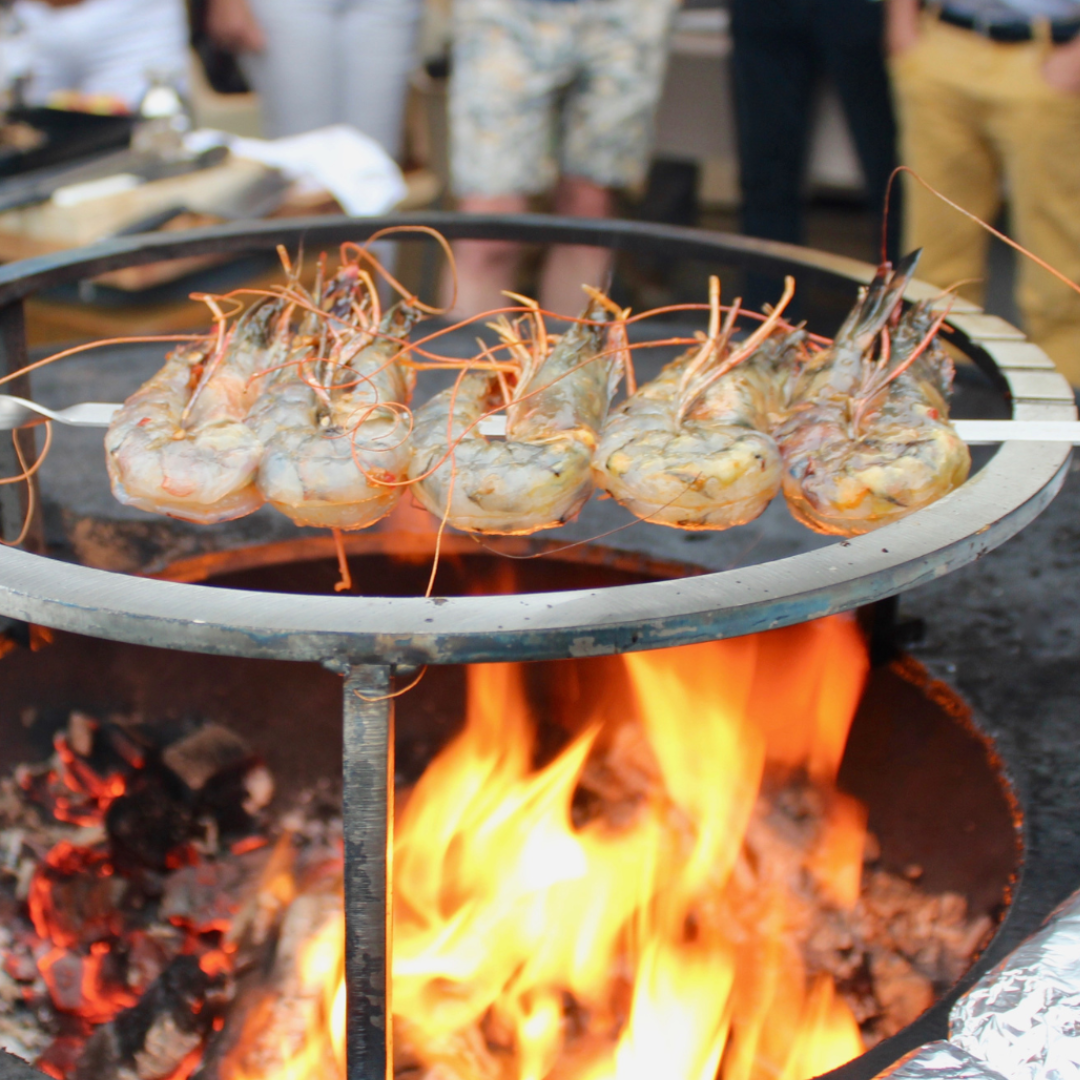

Cooking over a wood fire changes the flavour of food in a way that's difficult to recreate with gas or electricity. It's not just about the smoke, but mainly the combination of direct heat, contact with the flames and natural temperature differences. Meat develops a deeper crust, vegetables become sweeter and fats develop more aroma.
When cooking outdoors, heat distribution plays a bigger role than many people realise. An open fire creates several heat zones at the same time. This gives you more control over caramelisation, roasting and cooking. Especially on a plancha or GrillRing, these temperature differences create an extra layer of flavour without overpowering the ingredients.
Anyone who regularly cooks over a wood fire will also notice that simplicity often works best. Good ingredients, fire control and time usually create more flavour than complicated marinades or sauces.
High heat creates deeper caramelisation
On a plancha BBQ or GrillRing, the steel can reach higher temperatures than many standard barbecues. This allows natural sugars to caramelise more quickly. You'll notice the difference immediately with onions, peppers, courgette and meat with a layer of fat.
With a wood fire, the heat is also less evenly distributed. That may sound unpredictable, but it actually adds character to the final result. Small differences in temperature create more depth in the seared surface and allow additional flavours to develop.
Beef in particular benefits from this. A steak cooked over charcoal or an open wood fire can develop a drier, more intense crust while the centre remains juicy.
Smoke adds aroma without overpowering the food
Not every type of smoke automatically adds good flavour. Clean-burning wood produces a light, aromatic smoke that subtly complements the ingredients. You'll notice this especially with foods that cook more slowly, such as chicken, potatoes or larger vegetables.
The type of wood makes a difference, although often less dramatically than people think. Oak and beech provide a relatively neutral, stable base. Fruitwoods such as apple or cherry add a slightly softer character. For everyday outdoor cooking, maintaining a clean, consistent fire is more important than experimenting with dozens of different types of wood.
Too much smoke can have the opposite effect. Thick white smoke can make food taste bitter and mask its natural flavours.
Fat and fire enhance each other
An important flavour difference develops when fat comes into contact with the hottest parts of the fire. Dripping fat creates brief flare-ups and additional smoke. Together, these add a distinctive roasted aroma to meat, fish and even vegetables.
On a GrillRing BBQ, this happens in a more controlled way than on a traditional grill grate. Some of the fat runs inwards towards the fire while the ingredients remain in contact with the hot steel. This creates a deep grilled flavour without having constant flames directly beneath the food.
You can also see this effect with smashburgers, ribeye or marinated chicken thighs. The fire responds directly to the ingredients you're cooking.
Wood fire affects moisture differently
Gas burners often provide relatively moist, stable heat. A wood fire produces a drier and more dynamic heat. As a result, moisture evaporates more quickly from the surface of ingredients, helping a crust to develop.
Potatoes develop a crispier outside, mushrooms gain a more concentrated flavour and thick cuts of meat retain their texture better when they're first seared over intense heat.
Fish requires a little more attention. Direct heat can dry out delicate varieties more quickly, which is why many people cook fish on the outer zones of a plancha or GrillRing.
Flavour is also about timing
Cooking over a wood fire requires a different sense of timing than cooking with gas. The fire is constantly changing, which means you move ingredients according to the heat rather than relying on fixed settings.
This way of cooking often produces better results because you work more actively with temperature, resting time and different zones across the cooking surface. Especially on a fire bowl BBQ, this creates a natural rhythm while cooking.
Many experienced outdoor cooks, for example, first place meat close to the fire to develop a crust before moving it to a gentler heat zone to finish cooking. This combination of direct and indirect heat gives you more control over both flavour and texture.
🔥 Explore our fire bowls, GrillRings and plancha BBQ accessories.
🔥 Looking for more tips on cooking over fire? Discover our other blogs.