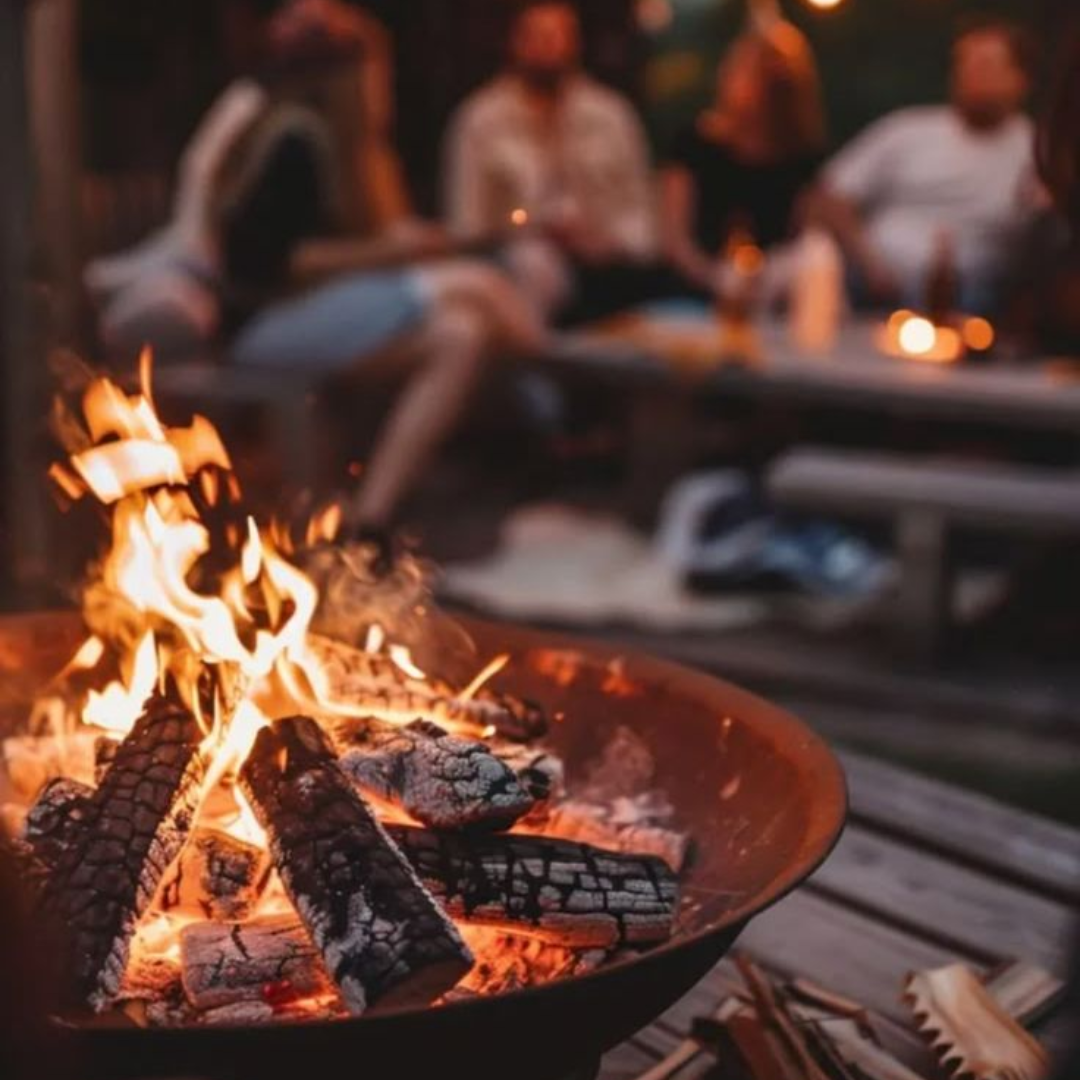

Anyone who regularly cooks on a plancha, GrillRing or fire bowl BBQ will quickly notice that heat doesn't behave the same way everywhere. A steak directly above an open flame reacts differently from a piece of salmon cooking gently beside the fire. The difference between direct and indirect heat determines how ingredients brown, cook and retain their juiciness.
When cooking over a wood fire, control isn't about knobs or thermostats, but about positioning. Where is the fire? How much distance is there between the heat source and the food? And how does the heat move across the cooking surface? Understanding these differences makes outdoor cooking more relaxed and helps you get noticeably more out of every BBQ session.
Direct and indirect heat aren't complicated techniques. They're simply two different ways of using heat deliberately, depending on what you're cooking.
What is direct heat?
Direct heat means placing ingredients directly above or close to the heat source. Think of a steak over hot embers, vegetables on a plancha above an open fire or burgers on the hottest section of a GrillRing.
On a plancha BBQ or GrillRing, direct heat is usually found around the inner section, close to the fire. Temperatures rise quickly here, creating intense caramelisation.
Direct heat works particularly well for:
-
Thin cuts of meat
-
Vegetables with a short cooking time
-
Quick dishes cooked at high temperatures
-
Ingredients where you want to develop a strong crust
When cooking over a wood fire, you'll quickly notice when direct heat becomes too intense. Fat reacts more aggressively, sugars burn more quickly and small ingredients can dry out if they're left in the hottest zone for too long. That's why direct heat requires attention and good timing.
What is indirect heat?
Indirect heat means ingredients aren't positioned directly above the fire, but beside it or further away. The gentler heat surrounds the food, allowing it to cook more evenly.
On a GrillRing or fire bowl BBQ, you can simply move ingredients towards the outer edge of the cooking surface. The temperature there is more stable and less intense. Larger cuts of meat in particular benefit from this approach.
Indirect heat is often used for:
-
Longer cooking times
-
Thicker cuts of meat
-
Ingredients that need to cook gently
-
Keeping dishes warm
An entrecôte, for example, can first be seared over direct heat and then moved towards the edge of the cooking surface to finish more gently. This gives you plenty of colour on the outside without overcooking the centre.
Why both heat zones matter when cooking over a wood fire
When it comes to outdoor cooking, much of the control comes from working with different temperature zones. With a wood fire, there's rarely one fixed temperature. The heat constantly changes as the wood burns down, new logs are added and airflow changes.
That's why many outdoor cooks deliberately work with several heat zones at the same time. On a GrillRing BBQ, these zones develop naturally because the centre becomes hotter than the outer edge.
This makes it possible to move ingredients throughout the cooking process:
-
Start with intense heat for searing
-
Move to gentler heat to finish cooking
-
Temporarily move food away from the hottest area to prevent further browning
This flexibility gives you much more control than cooking everything over maximum heat.
What are the most common mistakes?
Many beginners use the same level of heat for everything. This often leads to two familiar problems: food that's too dark on the outside but still undercooked in the centre, or food that's completely cooked through without developing a proper crust.
Direct heat is also often underestimated when cooking fattier ingredients. Chicken thighs, sausages and marinated meat can react quickly to high temperatures. Moving them slightly further away from the centre of the fire makes the cooking process much easier to control.
With indirect heat, the opposite problem can occur. If the fire is too weak, there may not be enough heat to properly cook the food, causing ingredients to slowly dry out instead.
Combining direct and indirect heat
Most dishes benefit from a combination of both techniques. Especially on a fire bowl BBQ, this is a natural way to cook.
A practical approach is:
-
Start with direct heat to create colour and a crust
-
Move to indirect heat for controlled cooking
-
Let the food rest briefly away from the hottest zone
This doesn't only work for meat. Potatoes, larger vegetables and fish often develop a better texture when they're not cooked entirely over direct heat.
When should you use direct or indirect heat?
Use direct heat when speed, colour and caramelisation are the priority. Choose indirect heat when control, even cooking and a gentler approach are more important.
Anyone who regularly cooks outdoors will eventually learn to look at the ingredient itself. Thickness, fat content and moisture all determine how intense the heat can be. That instinct doesn't come from theory alone, but from spending time cooking around a real fire.
🔥 Explore our fire bowls, GrillRings and plancha BBQ accessories.
🔥 Looking for more tips on cooking over fire? Discover our other blogs.